



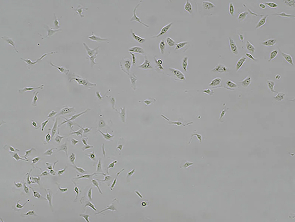

For research use only
| Cat No. | ABI-TC4173 |
| Product Type | Immortalized Cell Lines |
| Cell Type | Epithelial |
| Species | Human |
| Growth Conditions | 37 ℃, 5% CO2 |
| Source Organ | Bronchia |
| Disease | Normal |
| Storage | Liquid Nitrogen |
Access BEAS-2B Cell Line human to model airway epithelial biology, inflammation response, and SV40-transformed respiratory cell characteristics.
BEAS-2B cell line is an immortalized human cell line derived from the normal bronchial epithelium and transformed with adenovirus 12-SV40 hybrid virus. They exhibit typical cobblestone epithelial morphology and retain characteristics of non-tumorigenic airway epithelium, including the expression of cytokeratins, E-cadherin, and tight junction proteins. BEAS-2B cells are widely used as an in vitro model to study airway biology, mucociliary function, oxidative stress, and responses to pollutants and pathogens. They respond robustly to inflammatory stimuli such as LPS, cigarette smoke extract, and allergens, making them valuable for respiratory toxicology, asthma, COPD, and lung cancer research. Although immortalized, BEAS-2B cells preserve many characteristics of normal bronchial epithelial cells, providing a balance between biological relevance and experimental convenience.
| Product Code | BEAS-2B Cell Line Human, BEAS-2B, BEAS2B Cells, Human Bronchial Epithelial Cell Line BEAS-2B |
| Species | Human |
| Cat.No | ABI-TC4173 |
| Product Category | Immortalized Cell Lines |
| Size/Quantity | 1 vial |
| Cell Type | Epithelial |
| Growth Mode | Adherent |
| Shipping Info | Dry ice |
| Growth Conditions | 37 ℃, 5% CO2 |
| Source Organ | Bronchia |
| Disease | Normal |
| Storage | Liquid Nitrogen |
| Product Type | Immortalized Cell Lines |
The BEAS-2B cell line is extensively used in respiratory disease and lung carcinogenesis research. It models epithelial-mesenchymal transition (EMT) and cancer development mechanisms, and serves in studying pneumococcal infections. BEAS-2B cells are also employed for toxicity and carcinogenicity screening, notably in investigating heavy metal-induced malignant transformation from chronic arsenic and chromium exposure.
When you publish your research, please cite our product as “AcceGen Biotech Cat.# XXX-0000”. In return, we’ll give you a $200 coupon. Simply click here and submit your paper’s PubMed ID (PMID).
Kassab M. Design of Lipid Nanoparticles of mRNA Vaccine against Respiratory Syncytial Virus by Bioinformatics in Egypt. Preprints.org. April 2024. doi:10.20944/preprints202404.0723.v1
Kassab M. Development of mRNA vaccine against Measles virus globally. Middle East Journal of Medical Genetics. 2024;0(0):0. doi:10.21608/mxe.2024.241269.1007
Kassab MM. Respiratory syncytial virus vaccine mRNA lipid nanoparticles pattern determined via bioinformatics. International Journal of Medical Arts. 2024;0(0):0. doi:10.21608/ijma.2024.311037.2016