




Primary Cells

Human Choroid Plexus Epithelial Cells

  • For research use only

Cat No.

ABC-TC3568

Product Type

Nervous Cells

Cell Type

Epithelial

Species

Human

Growth Conditions

37 ℃, 5% CO2

Source Organ

Choroid Plexus

Disease

Normal

Storage

Liquid Nitrogen

Human choroid plexus epithelial cells form the blood-CSF barrier, secrete cerebrospinal fluid,express TTR, playing key roles in brain nutrient transport.

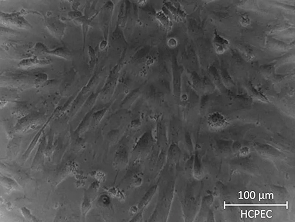
Product Image

Description

Human Choroid Plexus Epithelial Cells (HCPEpCs) are specialized polarized epithelial cells isolated from the choroid plexus, the brain structure responsible for cerebrospinal fluid (CSF) production. These cuboidal-shaped cells form tight junctions and exhibit characteristic microvilli-covered apical surfaces. They express key markers including transthyretin (TTR), aquaporin-1 (AQP1), and cytokeratin 18 (CK18). HCPEpCs play crucial roles in maintaining the blood-CSF barrier, regulating ion transport, and secreting neuroprotective factors. They are valuable tools for studying neurodevelopmental disorders (e.g., hydrocephalus), neurodegenerative diseases (e.g., Alzheimer’s disease), and neuroinflammatory processes. Choroid plexus epithelial cells serve as a physiologically relevant choroid plexus model, with the choroid plexus epithelium and associated choroidal cells enabling studies of barrier function, CSF secretion, and central nervous system homeostasis.

Product Code

Human Choroid Plexus Epithelial Cells, Choroid Plexus Epithelium Cells Human, CP Epithelial Cells, Human Ventricular Epithelial Cells, HCP-EpiCs

Species

Human

Cat.No

ABC-TC3568

Product Category

Primary Cells

Size/Quantity

1 vial

Cell Type

Epithelial

Growth Mode

Adherent

Shipping Info

Dry Ice

Growth Conditions

37 ℃, 5% CO2

Source Organ

Choroid Plexus

Disease

Normal

Biosafety Level

1

Storage

Liquid Nitrogen

Product Type

Nervous Cells

Key Features

-Backed by AcceGen advanced technology
-Cryopreserved for highest viability and plating efficiency
-Quality-tested for accurate results

Quality Control

All cells test negative for mycoplasma, bacteria, yeast, and fungi.

Application

  • Human Choroid Plexus Epithelial Cells are essential for blood-CSF barrier modeling, neuropharmacology studies, and neurological disease research. They are used to investigate CSF secretion mechanisms, drug transport across the brain barrier, and neuroprotective factor production. Researchers employ HCPEpCs in transwell barrier assays, gene expression profiling, and co-culture systems with neurons or microglia to study neuroimmune interactions. Their unique secretory properties make them particularly valuable for developing treatments for neurological disorders and brain infections.

Citation

When you publish your research, please cite our product as “AcceGen Biotech Cat.# XXX-0000”. In return, we’ll give you a $200 coupon. Simply click here and submit your paper’s PubMed ID (PMID).
Erb U, Schwerk C, Schroten H, Karremann M. Review of functional in vitro models of the blood-cerebrospinal fluid barrier in leukaemia research. J Neurosci Methods. 2020;329:108478. doi:10.1016/j.jneumeth.2019.108478

Frequently Asked Questions

  • What are Human Choroid Plexus Epithelial Cells?

    Human Choroid Plexus Epithelial Cells are specialized cells found in the choroid plexus, a structure within the brain’s ventricles responsible for producing cerebrospinal fluid (CSF). These cells form a barrier between the blood and CSF, and regulate the composition of CSF by transporting ions and nutrients.

  • What are the primary functions of Human Choroid Plexus Epithelial Cells?

    The main function of these cells is to produce and regulate the composition of cerebrospinal fluid (CSF). They maintain the blood-CSF barrier, transport ions, and remove waste products from the brain, playing a vital role in maintaining the brain’s homeostasis.

  • What role do Human Choroid Plexus Epithelial Cells play in the blood-CSF barrier?

    These cells form tight junctions that create the blood-CSF barrier, which prevents harmful substances in the blood from entering the CSF. They selectively allow the transport of ions, nutrients, and other molecules into the CSF while blocking toxins and pathogens.

  • What are Human Choroid Plexus Epithelial Cells used for in research?

    These cells are used in research related to cerebrospinal fluid production, blood-CSF barrier integrity, neuroinflammation, and brain homeostasis. They are also utilized in drug discovery to develop therapies for diseases that affect the choroid plexus or CSF regulation.

  • Can Human Choroid Plexus Epithelial Cells be used to model neurological diseases?

    Yes, these cells are valuable for modeling neurological diseases, particularly those involving disruptions in CSF production or blood-CSF barrier dysfunction. They are used to study neuroinflammatory diseases, hydrocephalus, and central nervous system infections.

Inquiring Human Choroid Plexus Epithelial Cells

We know how valuable your research is to you, but are you wondering what you can expect to pay for quick accurate results every time? Fill out a request in the form below and we’ll get back to you within 24 hours with a quote.
High Viability
To succeed in cell culture
Precision and Reliability
To support a consistent result
Customization Options
Tailed to your research

Tags

AcceGen Scroll Top Button