



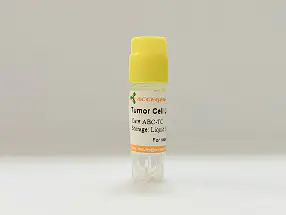
For research use only
| Cat No. | ABC-TC1049 |
| Product Type | Human Nerve Tumors Cell Lines |
| Cell Type | Epithelial |
| Species | Human |
| Growth Conditions | 37 ℃, 5% CO2 |
| Source Organ | Bone Marrow |
| Product Code | SK N SH; SKN-SH; SK-NSH; SKNSH; NSH |
SK-N-SH is a human neuroblastoma cell line ideal for neuronal differentiation studies, dopamine metabolism, and cytotoxicity assays in neuro-oncology.
SK-N-SH is a human neuroblastoma cell line that was originally isolated from metastatic cells found in a 4-year-old female patient’s bone marrow aspirate. SK-N-SH exhibits epithelial-like morphology and adherent culture properties. The stemline karyotype model number of SK-N-SH is 47, with normal chromosomes N9 and N22 being monosomic, and N7 being trisomic. Structural changes form two marker chromosomes, 9q+ and 22q+, with an additional band on one copy of chromosome N7, forming the marker chromosomes described by R.C. Seeger. These cells may have partial translocations on the q arms of chromosomes N9 and N22.
| Product Code | SK N SH; SKN-SH; SK-NSH; SKNSH; NSH |
| Species | Human |
| Cat.No | ABC-TC1049 |
| Product Category | Tumor Cell Lines |
| Size/Quantity | 1 vial |
| Cell Type | Epithelial |
| Growth Mode | Adherent |
| Shipping Info | Dry Ice |
| Growth Conditions | 37 ℃, 5% CO2 |
| Source Organ | Bone Marrow |
| Biosafety Level | 1 |
| Storage | Liquid Nitrogen |
| Product Type | Human Nerve Tumors Cell Lines |
The SK-N-SH cell line is a widely used model in neuroscience research. It facilitates studies on neuronal differentiation, neurodevelopment, and signal transduction. Researchers use these cells to explore the mechanisms of neurodegenerative diseases, such as Alzheimer’s and Parkinson’s, and to evaluate neurotoxicity and neuroprotective agents. Their ability to differentiate into neuron-like cells also supports research into brain development and neurological drug discovery.
When you publish your research, please cite our product as “AcceGen Biotech Cat.# XXX-0000”. In return, we’ll give you a $100 coupon. Simply click here and submit your paper’s PubMed ID (PMID).