



For research use only
| Cat No. | ABC-TC0154 |
| Product Type | Mouse Colon Cancer Cell Lines |
| Species | Mouse |
| Growth Conditions | 37 ℃, 5% CO2 |
| Product Code | Colon 26, Colon26, colon-26 |
Colon-26 cell line is derived from chemically induced colon cancer in Balb/c mice and supports immunotherapy, tumor biology, and drug screening.
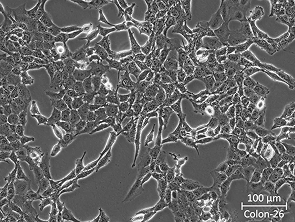
Colon-26(CT26) is a mouse colon adenocarcinoma cell line derived from the tumor tissue of Balb/c mice, induced by a single rectal application of N-Nitroso-N-Methylurethan (NMU) and represents an aggressive adenocarcinoma model. They exhibit epithelial morphology with polygonal/spindle-shape, commonly seen in colorectal adenocarcinoma and form adherent monolayer with loose cell-cell contacts under standard culture conditions. The cells are highly tumorigenic in syngeneic BALB/c mice and frequently used in metastasis studies, as they have the ability to form spontaneous lung and liver metastases following subcutaneous or intravenous injection. Colon-26 is characterized by aneuploid karyotype and elevated expression of inflammatory and proangiogenic mediators such as IL-6, VEGF, and MMPs, reflecting features of the tumor microenvironment. As a widely used CT26 cell line, this model is integral to CT26 tumor model research and serves as a representative system within colon cancer cell lines, frequently utilized in preclinical CT26 mouse model studies.
| Product Code | Colon 26, Colon26, colon-26 |
| Species | Mouse |
| Cat.No | ABC-TC0154 |
| Product Category | Tumor Cell Lines |
| Size/Quantity | 1 vial |
| Shipping Info | Dry Ice |
| Growth Conditions | 37 ℃, 5% CO2 |
| Biosafety Level | 1 |
| Storage | Liquid Nitrogen |
| Product Type | Mouse Colon Cancer Cell Lines |
Colon-26 cells are widely used in preclinical studies to evaluate anticancer agents, immunotherapies, and metastasis mechanisms in colorectal cancer. Their ability to form tumors and metastases in immunocompetent BALB/c mice enables investigation of tumor-immune interactions and host responses. This model is particularly useful for studying cancer cachexia, cytokine signaling, and angiogenesis, making it valuable for translational research and therapeutic development.
When you publish your research, please cite our product as “AcceGen Biotech Cat.# XXX-0000”. In return, we’ll give you a $200 coupon. Simply click here and submit your paper’s PubMed ID (PMID).