- In-Stock Tumor Cell Lines
- Human Orbital Fibroblasts
- Human Microglia
- Human Pulmonary Alveolar Epithelial Cells
- Human Colonic Fibroblasts
- Human Type II Alveolar Epithelial Cells
- Human Valvular Interstitial Cells
- Human Thyroid Epithelial Cells
- C57BL/6 Mouse Dermal Fibroblasts
- Human Alveolar Macrophages
- Human Dermal Fibroblasts, Adult
- Human Lung Fibroblasts, Adult
- Human Retinal Muller Cells
- Human Articular Chondrocytes
- Human Retinal Pigment Epithelial Cells
- Human Pancreatic Islets of Langerhans Cells
- Human Kidney Podocyte Cells
- Human Renal Proximal Tubule Cells
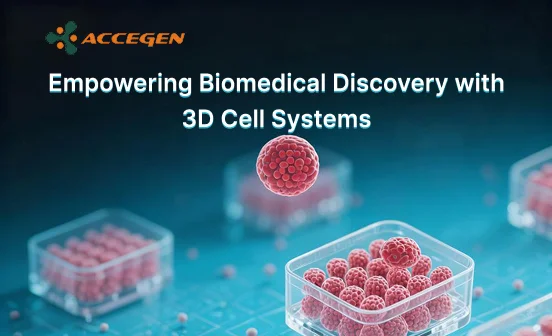
The transition from 2D monolayers to advanced 3D cell systems marks a major turning point in biomedical discovery. As discussed in our previous blog, Organoids vs. Traditional Cell Lines: Is Drug Screening Entering the 3D Era?, these innovative models are vastly improving the biological fidelity of in vitro research. More than just a trend, 3D culture is a transformative approach that bridges the gap between flat cell layers and the structural and functional complexity of living tissues, empowering a new level of discovery.
What is a 3D cell culture?
3D cell culture enables cells to grow in all spatial directions within a supportive scaffold or matrix, allowing cell–cell and cell–matrix interactions that closely resemble those occurring in vivo. These systems reproduce key aspects of native tissues—structural organization, biochemical gradients, and mechanical cues—that traditional monolayer cultures cannot mimic. However, optimizing extracellular matrix (ECM) composition and maintaining balanced nutrient and oxygen gradients remain major challenges in achieving physiological fidelity.
To address this, researchers can utilize matrices derived from natural sources. For example, the EHS Cell Line (ABL-TC0172) (mouse-derived, RUO) is a murine chondrosarcoma cell line that produces basement membrane components such as laminin and type IV collagen. It provides a biologically relevant ECM environment suitable for constructing 3D cultivation scaffolds, organoid embedding, and tumorsphere formation studies.
What is an organoid model?
Organoid models are self-organized, miniaturized tissue structures derived from stem cells or patient tissues. They recapitulate the morphology, functionality, and genetic features of human organs, enabling researchers to model diseases, test therapeutics, and explore developmental biology in a human-relevant context.
A successful organoid system starts with a validated cellular source. For cancer research, well-characterized lines such as the MCA-3D Cell Line (ABC-TC0635) (mouse-derived, RUO), a murine tumor-derived cell line, provide a reliable foundation for carcinogenesis and 3D modeling research. Alternatively, pluripotent stem cell platforms like HighQC™ Human Embryonic Stem Cells (ABC-SC0104) (RUO) can be differentiated into multiple germ layers under appropriate ethical and culture conditions, serving as a powerful starting point for generating human organoids.
How to get started in 3D cell culture
Successful 3D culture requires an animal-free matrix, low-adhesion plates, and carefully controlled conditions that support spheroid or suspension growth. Classical models such as HeLa Cells (ABC-TC0354) (human, RUO) can be adapted for 3D spheroid assays to study cancer invasion, drug sensitivity, or microenvironmental responses. Researchers should evaluate scaffold composition, oxygen/nutrient diffusion, and reproducibility when optimizing 3D cell culture protocols.
Advantages of 3D cell culture
3D systems offer enhanced physiological relevance and predictive accuracy. They:
- Better model tissue organization and tumor microenvironments.
- Provide improved correlation with clinical drug responses.
- Reduce reliance on animal testing through more human-representative results.
Nevertheless, challenges such as higher costs, complex handling, and limited scalability remain, requiring careful experimental design and validation.
3D cell culture applications span oncology, immunology, drug discovery, and regenerative medicine.
A catalyst for precision and discovery
At AcceGen, we view 3D systems and organoid technologies not merely as tools but as catalysts for precision, reproducibility, and discovery. Our expanding portfolio—from 3D-supportive matrices to pluripotent and cancer-derived cell models—empowers scientists to push the boundaries of biomedical research.

Copyright - Unless otherwise stated all contents of this website are AcceGen™ All Rights Reserved – Full details of the use of materials on this site please refer to AcceGen Editorial Policy – Guest Posts are welcome, by submitting a guest post to AcceGen you are agree to the AcceGen Guest Post Agreement – Any concerns please contact marketing@accegen.com