- In-Stock Tumor Cell Lines
- Human Orbital Fibroblasts
- Human Microglia
- Human Pulmonary Alveolar Epithelial Cells
- Human Colonic Fibroblasts
- Human Type II Alveolar Epithelial Cells
- Human Valvular Interstitial Cells
- Human Thyroid Epithelial Cells
- C57BL/6 Mouse Dermal Fibroblasts
- Human Alveolar Macrophages
- Human Dermal Fibroblasts, Adult
- Human Lung Fibroblasts, Adult
- Human Retinal Muller Cells
- Human Articular Chondrocytes
- Human Retinal Pigment Epithelial Cells
- Human Pancreatic Islets of Langerhans Cells
- Human Kidney Podocyte Cells
- Human Renal Proximal Tubule Cells
Cells are constantly communicating, and one of the most important ways they “talk” is through paracrine signaling. Unlike hormones in endocrine signaling that travel long distances, paracrine signals act locally, allowing cells to “talk” with their neighbors. This type of communication is key to maintaining healthy tissues and is a major focus in mammalian cell culture research. Paracrine signaling also plays a critical role in tissue repair, immune responses, and remodeling of the extracellular matrix, making it a central process in both health and disease research.
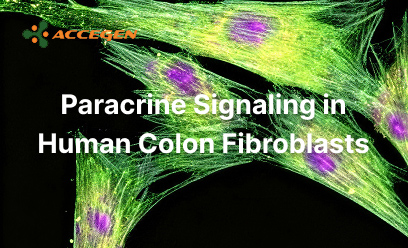
In laboratory studies, human colonic fibroblasts are often used to explore the molecular mechanisms of these signals. These fibroblasts release growth factors and cytokines that influence nearby epithelial cells, immune cells, and other fibroblasts. This local communication—paracrine signaling—helps researchers recreate realistic tissue behavior in vitro and allows them to investigate how tissues respond to injury, inflammation, or cancer-related changes.
You can explore these cells here: Human Colonic Fibroblasts. They are primary cells isolated from healthy human colon tissue, ideal for studying how cells interact through paracrine, autocrine signaling, and juxtacrine signaling in co-culture systems. Researchers often use these cells to examine drug responses, study fibrosis, and build complex tissue models that closely recapitulate the in vivo microenvironment.

Other Signaling Modes
- Autocrine signaling: Cells respond to the signals they produce themselves, maintaining their own growth and survival.
- Juxtacrine signaling: Direct contact between cells enables instant communication and precise regulation in tissues.
- Endocrine signaling: Long-distance hormonal communication that affects distant cells, often simulated in vitro through the addition of hormones to the culture medium.
Studying all these pathways together allows scientists to understand tissue behavior more completely and investigate how multiple communication modes coordinate to regulate cellular function.
Modeling Biology with High-Quality Cells
When setting up tissue cultures, healthy cells like human colonic fibroblasts are thawed, plated, and grown under controlled conditions. Proper cell culture techniques and mammalian cell culture protocols help maintain cell viability and functionality, aiming to preserve their paracrine signaling and other communication pathways as closely as possible. Co-culture systems, conditioned media experiments, and 3D culture setups further allow researchers to study local cell interactions in a realistic environment, supporting investigations into disease modeling, regenerative medicine, and drug testing.
Understanding paracrine signaling and its interaction with autocrine, juxtacrine, and endocrine pathways is essential for recreating accurate tissue models in vitro. Using high-quality products like Human Colonic Fibroblasts enables researchers to study local cellular communication, tissue remodeling, and disease mechanisms in a controlled environment. These insights help bridge laboratory research and real-world applications, providing a reliable platform for drug testing, regenerative medicine, gastrointestinal biology studies, and advanced cellular modeling of complex tissue interactions.

Copyright - Unless otherwise stated all contents of this website are AcceGen™ All Rights Reserved – Full details of the use of materials on this site please refer to AcceGen Editorial Policy – Guest Posts are welcome, by submitting a guest post to AcceGen you are agree to the AcceGen Guest Post Agreement – Any concerns please contact marketing@accegen.com