



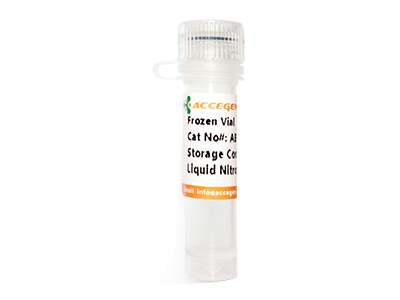
For research use only
| Cat No. | ABC-KH017Y |
| Product Type | Knockout Stable Cell Line |
| Cell Type | Epithelial |
| Species | Human |
| Host Cell | 293T |
| Source Organ | Kidney |
| Disease | Normal |
| Storage | Liquid Nitrogen |
Axin1 Knockout 293T Cell Line by AcceGen offers Wnt/β-catenin pathway disruption for cancer research and developmental biology applications.
Axin1 Knockout 293T Cell Line is engineered from human embryonic kidney 293T cells using CRISPR/Cas9 technology to disrupt the Axis Inhibition Protein 1 (Axin1) gene, a critical scaffold protein in the Wnt/β-catenin signaling pathway that regulates cell proliferation, differentiation, and embryonic development. This knockout model exhibits hyperactivated Wnt signaling with consequent β-catenin stabilization while maintaining 293T cells’ characteristic adherent growth with epithelial morphology and high transfection efficiency. The cell line provides a powerful tool for studying Wnt pathway dysregulation, carcinogenesis, and stem cell maintenance, particularly in research involving tumor formation and tissue regeneration. Maintained at low passage numbers (<P20) with genetic stability, the knockout efficiency is validated through genomic PCR, Sanger sequencing, and Western blot analysis of β-catenin accumulation. The cell line has undergone rigorous quality control and is certified free of contamination from HIV-1, HBV, HCV, Syphilis, mycoplasma, fungi, yeast, and bacteria.
| Species | Human |
| Cat.No | ABC-KH017Y |
| Product Category | Transfected Stable Cell Lines |
| Size/Quantity | 1 vial |
| Cell Type | Epithelial |
| Growth Mode | Adherent |
| Shipping Info | Dry Ice |
| Growth Conditions | 37 ℃, 5% CO2 |
| Source Organ | Kidney |
| Disease | Normal |
| Biosafety Level | 1 |
| Storage | Liquid Nitrogen |
| Product Type | Knockout Stable Cell Line |
| Host Cell | 293T |
| Gene Info | Axin1 |
| Quality Control | All cells test negative for mycoplasma, bacteria, yeast, and fungi. |
The Axin1 Knockout 293T Cell Line is a powerful tool for studying Wnt/β-catenin signaling and its role in development and disease. This engineered model enables investigation of Axin1’s function as a key scaffold protein in the β-catenin destruction complex. Researchers utilize this system to examine Wnt pathway dysregulation, tumorigenesis, and potential therapeutic targets. The knockout cell line provides a controlled platform for analyzing β-catenin stabilization and downstream transcriptional activation, offering insights for cancer research and regenerative medicine applications.