



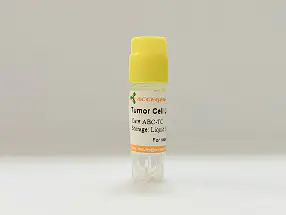
For research use only
| Cat No. | ABC-TC0162 |
| Product Type | Human Melanoma Cell Lines |
| Species | Human |
| Growth Conditions | 37 ℃, 5% CO2 |
| Source Organ | Skin |
| Disease | Cutaneous Melanoma |
| Product Code | COLO-679, Human Melanoma Cell Line COLO-679, COLO 679, COLO679, COLO-0679, Malignant Melanoma Cells, Human Tumor Cell Line |
Human skin melanoma. Derived from a melanoma of a 47 year old female.
COLO-679 is a human melanoma cell line derived from skin malignant melanoma tissue of a 47-year-old female. Morphologically, the cells are polygonal or irregular in shape, exhibiting epithelial-like characteristics and growing adherently in culture. Under optimal conditions, this cell line demonstrates relatively high proliferation rates, allowing for efficient expansion for experimental use. COLO-679 cells exhibit a degree of heterogeneity in gene expression, reflecting the intrinsic complexity of melanoma. COLO-679 cells express mRNA for the tachykinin NK-1 receptor and are involved in mitochondrial metabolism, lipid biosynthesis, and cytoskeletal organization. This cell line can be used in tumorigenicity studies. Each lot undergoes rigorous screening and isolation procedures, and is rigorously tested to ensure it is free of contamination from HIV-1, HBV, HCV, Syphilis, Mycoplasma, Fungi, Yeast, and Bacteria.
| Product Code | COLO-679, Human Melanoma Cell Line COLO-679, COLO 679, COLO679, COLO-0679, Malignant Melanoma Cells, Human Tumor Cell Line |
| Species | Human |
| Cat.No | ABC-TC0162 |
| Product Category | Tumor Cell Lines |
| Size/Quantity | 1 vial |
| Growth Mode | Adherent |
| Shipping Info | Dry Ice |
| Growth Conditions | 37 ℃, 5% CO2 |
| Source Organ | Skin |
| Disease | Cutaneous Melanoma |
| Biosafety Level | 1 |
| Storage | Liquid Nitrogen |
| Product Type | Human Melanoma Cell Lines |
COLO-679 is widely used to explore the pathogenesis of melanoma, including key processes such as tumor cell proliferation, invasion, metastasis, and drug resistance. In drug development, it can be used for in vitro screening and efficacy evaluation of experimental compounds and investigational agents in melanoma research. In addition, COLO 679 viability assays are commonly applied to evaluate cellular responses to genetic or pharmacological perturbations, providing important insights into tumor cell survival and growth regulation.
When you publish your research, please cite our product as “AcceGen Biotech Cat.# XXX-0000”. In return, we’ll give you a $200 coupon. Simply click here and submit your paper’s PubMed ID (PMID).