



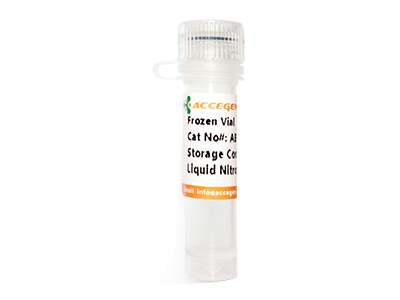
For research use only
| Cat No. | ABC-TC3441 |
| Product Type | Other Animal Primary Cells |
| Cell Type | Red Blood Cell |
| Species | Goat |
| Growth Conditions | 37 ℃, 5% CO2 |
| Source Organ | Blood |
| Disease | Normal |
| Storage | Liquid Nitrogen |
Advance hemagglutination and cross-reactivity assays using stabilized Goat Red Blood Cells in immunohematology and diagnostic platform development.
Goat Red Blood Cells are primarily sourced from the peripheral blood of goats. As a specialized type of erythrocyte, they exhibit a characteristic biconcave discoid morphology, with a thinner center and thicker edges. This unique structure provides them with a large surface area, facilitating efficient gas exchange. In terms of their development, GRBCs mature in vivo from hematopoietic stem cells in the bone marrow. After maturation, they lack a nucleus and organelles, which enables them to efficiently transport oxygen. These cells contain hemoglobin, which is responsible for the transport of oxygen and carbon dioxide. The main functions of these cells include binding oxygen via hemoglobin and transporting it to peripheral tissues, facilitating carbon dioxide transport back to the lungs, and contributing to acid–base balance regulation. Each lot undergoes rigorous screening and isolation procedures, and is rigorously tested to ensure it is free of contamination from Mycoplasma, Fungi, Yeast, and Bacteria.
| Product Code | Goat RBCs, Caprine Red Blood Cells, Goat Erythrocytes, Caprine RBC, Goat Blood Erythrocytes |
| Species | Goat |
| Cat.No | ABC-TC3441 |
| Product Category | Primary Cells |
| Size/Quantity | 1 vial |
| Cell Type | Red Blood Cell |
| Growth Mode | Suspension |
| Shipping Info | Dry Ice |
| Growth Conditions | 37 ℃, 5% CO2 |
| Source Organ | Blood |
| Disease | Normal |
| Biosafety Level | 1 |
| Storage | Liquid Nitrogen |
| Product Type | Other Animal Primary Cells |
| Quality Control | All cells test negative for mycoplasma, bacteria, yeast, and fungi. |
Goat Red Blood Cells are widely used in immunology and serology research. They are commonly utilized for hemagglutination assays and complement fixation tests to evaluate antibody activity and complement system function in experimental systems. In addition, these cells serve as useful reagents for studying erythrocyte membrane properties, antigen–antibody interactions, and immune response mechanisms in vitro.
When you publish your research, please cite our product as “AcceGen Biotech Cat.# XXX-0000”. In return, we’ll give you a $200 coupon. Simply click here and submit your paper’s PubMed ID (PMID).