



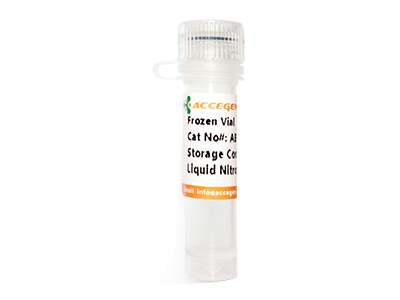
For research use only
| Cat No. | ABC-SC217Y |
| Product Type | Induced pluripotent stem cell-Derived cells (iPSC-Derived cells) |
| Cell Type | Endothelial Cells |
| Species | Human |
| Growth Conditions | 37 ℃, 5% CO2 |
| Source Organ | Induced pluripotent stem cell |
| Disease | Normal |
| Storage | Liquid Nitrogen |
Human iPSC-derived Endothelial Cells provide a reliable cryopreserved source for vascular research, with CD31 and vWF expression and safety testing.
HighQC™ Human iPSC-derived Endothelial Cells are high-quality cryopreserved cells derived from a human induced pluripotent stem cell (HiPSC) line. These cells are generated using advanced mRNA reprogramming technology from human dermal fibroblasts (HDF), ensuring a reliable and reproducible source of endothelial cells. The HiPSCs are efficiently differentiated into mesoderm cells via small-molecule activation of WNT signaling in chemically defined media. These mesoderm cells are then converted into endothelial cells using vascular endothelial growth factor (VEGF) and fibroblast growth factor (FGF), providing a robust model for vascular research and related studies. These endothelial cells express CD31 (PECAM-1) and vWF (von Willebrand factor). The cells undergo stringent quality control and are tested to be negative for HIV-1, HBV, HCV, mycoplasma, bacteria, yeast, and fungi.
| Species | Human |
| Cat.No | ABC-SC217Y |
| Quality Control | All cells test negative for mycoplasma, bacteria, yeast, and fungi. |
| Product Category | Stem Cells |
| Size/Quantity | 1 vial |
| Cell Type | Endothelial Cells |
| Growth Mode | Adherent |
| Shipping Info | Dry Ice |
| Growth Conditions | 37 ℃, 5% CO2 |
| Source Organ | Induced pluripotent stem cell |
| Disease | Normal |
| Biosafety Level | 1 |
| Storage | Liquid Nitrogen |
| Product Type | Induced pluripotent stem cell-Derived cells (iPSC-Derived cells) |
HighQC™ Human iPSC-derived Endothelial Cells are ideal for a variety of research applications. They are widely used in vascular research to study endothelial cell biology and vascular development. The cells are also suitable for drug screening, particularly for evaluating compounds that modulate endothelial cell function or affect vascular health. These cells are a valuable tool for disease modeling, including studies on cardiovascular diseases, inflammation, and other vascular-related conditions. Additionally, they can be employed in toxicity assays and in vitro assays aimed at understanding endothelial responses to various stimuli.
When you publish your research, please cite our product as “AcceGen Biotech Cat.# XXX-0000”. In return, we’ll give you a $100 coupon. Simply click here and submit your paper’s PubMed ID (PMID).