



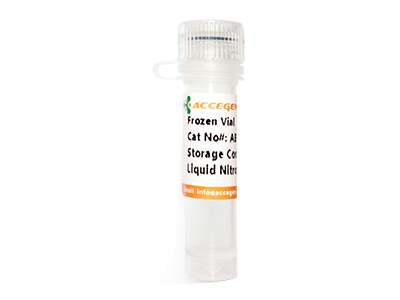
For research use only
| Cat No. | ABC-X0011C |
| Product Type | Overexpression Stable Cell Lines |
| Cell Type | Lymphocytes |
| Species | Human |
| Host Cell | BAF3 |
| Source Organ | Lymphatic |
| Disease | Normal |
| Storage | Liquid Nitrogen |
This BAF3 cell line models the F317L mutation in BCR-ABL, aiding in resistance mechanism studies and targeted drug development for leukemia.
The BCR ABL (F317L) BAF3 Cell Line is a genetically engineered model derived from murine BAF3 parental cells. It is generated through stable expression of the human BCR ABL fusion gene harboring the F317L point mutation, integrated using lentiviral transduction. This mutation is located within the ABL kinase domain and is associated with resistance to tyrosine kinase inhibitors such as imatinib. Engineered cells are validated by qRT-PCR.
Target
The BCR-ABL fusion results from the Philadelphia chromosome translocation and encodes a constitutively active tyrosine kinase driving leukemogenesis. The F317L mutation alters the ATP-binding site, reducing sensitivity to first-generation BCR-ABL inhibitors. This cell model enables investigation of drug resistance mechanisms and evaluation of second/third-generation inhibitors. AcceGen offers generation of stable overexpression cell lines targeting any gene of your interest. Polyclonal or monoclonal is optional based on customers’ research needs.
| Species | Human |
| Cat.No | ABC-X0011C |
| Product Category | Transfected Stable Cell Lines |
| Size/Quantity | 1 vial |
| Cell Type | Lymphocytes |
| Growth Mode | Suspension |
| Shipping Info | Dry Ice |
| Growth Conditions | 37 °C, 5% CO2 |
| Source Organ | Lymphatic |
| Disease | Normal |
| Biosafety Level | 1 |
| Storage | Liquid Nitrogen |
| Product Type | Overexpression Stable Cell Lines |
| Host Cell | BAF3 |
| Quality Control | All cells test negative for mycoplasma, bacteria, yeast, and fungi. |
The BCR ABL (F317L) BAF3 Cell Line provides a robust platform for preclinical drug screening, resistance profiling, and signaling pathway analysis in chronic myeloid leukemia research. It is widely used for evaluating efficacy of novel kinase inhibitors targeting TKI-resistant BCR-ABL mutants.