



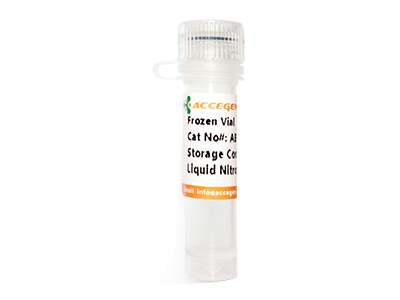
For research use only
| Cat No. | ABC-SC162G |
| Product Type | Human Induced Pluripotent Stem Cells |
| Cell Type | Induced Pluripotent Stem Cell |
| Growth Conditions | 37 ℃, 5% CO2 |
| Disease | Niemann-Pick Disease |
| Storage | Liquid Nitrogen |
Explore Human iPSC From Fibroblast-Niemann-Pick Disease Type B for disease modeling, SMPD1 deficiency studies, and therapeutic drug evaluation.
Human iPSC From Fibroblast-Niemann-Pick Disease, Type B: High-quality cell line ideal for studies on Niemann-Pick Disease, Type B
Sphingomyelin Phosphodiesterase 1, Acid Lysosomal, SMPD1.
| Cat.No | ABC-SC162G |
| Quality Control | All cells test negative for HIV-1, HBV, HCV, mycoplasma, bacteria, yeast, and fungi. |
| Product Category | Stem Cells |
| Size/Quantity | 1 vial |
| Cell Type | Induced Pluripotent Stem Cell |
| Growth Mode | Adherent |
| Shipping Info | Dry Ice |
| Growth Conditions | 37 ℃, 5% CO2 |
| Disease | Niemann-Pick Disease |
| Storage | Liquid Nitrogen |
| Product Type | Human Induced Pluripotent Stem Cells |
For research use only
When you publish your research, please cite our product as “AcceGen Biotech Cat.# XXX-0000”. In return, we’ll give you a $100 coupon. Simply click here and submit your paper’s PubMed ID (PMID).
Both Type A and Type B Niemann-Pick Disease are lysosomal storage disorders (LSDs) caused by mutations in the SMPD1 gene, resulting in a deficiency in acid sphingomyelinase (ASM) function. This deficiency leads to the abnormal accumulation of sphingomyelin in lysosomes.
Type B: Caused by SMPD1 mutations, but it presents a partial deficiency of the enzyme. The disease primarily affects the non-CNS tissues, and patients generally experience a slower progression compared to Type A. Type B is suitable for studying lipid storage and metabolic disorders, but the Type A model remains preferred for studying classical LSD mechanisms.
Type A: Also caused by mutations in the SMPD1 gene resulting in a severe deficiency of acid sphingomyelinase. Patients typically experience early onset, rapid progression, and severe central nervous system (CNS) involvement, with significant sphingomyelin accumulation in various cell types. This aligns with the clinical and cytological features of classic lysosomal storage disorders. If your research focuses on studying the pathological mechanisms of LSDs or drug screening, the Type A iPSC model is recommended.