



• Happy Holidays from AcceGen! Orders placed during Dec 22–Jan 2 will be processed and shipped after operations resume. Please plan ahead.

Primary Cells

Human Peripheral Blood Immature Dendritic Cells

  • For research use only

Cat No.

ABC-TC5467

Product Type

Immune Cells

Cell Type

DC Cell

Species

Human

Growth Conditions

37 ℃, 5% CO2

Source Organ

Peripheral Blood

Disease

Normal

Storage

Liquid Nitrogen

Human Peripheral Blood Immature Dendritic Cells, primary dendritic cells derived from immunomagnetically selected peripheral blood monocytes.

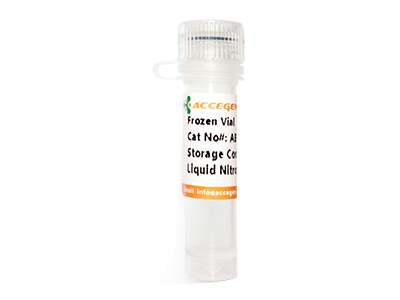
Product Image

Description

Primary human immature dendritic cells (DCs) were derived from immunomagnetically selected peripheral blood (PB) monocytes. Monocytes were cultured in RPMI 1640 Medium with 10% fetal bovine serum (FBS), GM-CSF and IL-4 for 5 days to generate immature DCs. PB was collected using one of the following anticoagulants: acid-citrate-dextrose (ACD), acid-citrate-dextrose solution A (ACDA), citrate-phosphate-dextrose (CPD), citrate-phosphate-double-dextrose (CP2D), or citrate-phosphate-dextrose-adenine (CPDA).

Species

Human

Cat.No

ABC-TC5467

Product Category Primary Cells
Size/Quantity

1 vial

Cell Type

DC Cell

Growth Mode

Suspension

Shipping Info

Dry Ice

Growth Conditions

37 ℃, 5% CO2

Source Organ

Peripheral Blood

Disease

Normal

Storage

Liquid Nitrogen

Product Type

Immune Cells

Application

  • For research use only

Citation

When you publish your research, please cite our product as “AcceGen Biotech Cat.# XXX-0000”. In return, we’ll give you a $100 coupon. Simply click here and submit your paper’s PubMed ID (PMID).

Frequently Asked Questions

  • What are Human Peripheral Blood Immature Dendritic Cells?

    Human Peripheral Blood Immature Dendritic Cells are antigen-presenting cells derived from peripheral blood monocytes. They play a crucial role in the immune system by capturing, processing, and presenting antigens to T cells. These cells are in an immature state, meaning they are highly phagocytic and have not yet fully developed the ability to stimulate T cells.

  • How are Immature Dendritic Cells obtained from peripheral blood?

    Immature dendritic cells can be obtained from peripheral blood mononuclear cells (PBMCs) through a process that typically involves isolation of monocytes followed by their culture in the presence of specific cytokines, such as GM-CSF (Granulocyte-Macrophage Colony-Stimulating Factor) and IL-4 (Interleukin-4), which promote differentiation into immature dendritic cells.

  • What are the key surface markers of Immature Dendritic Cells?

    Immature dendritic cells typically express markers such as CD11c, HLA-DR, and CD14, but have low expression of co-stimulatory molecules like CD80, CD83, and CD86, which are upregulated upon maturation.

  • What are the differences between immature and mature dendritic cells?

    Immature dendritic cells are primarily involved in antigen capture and processing, while mature dendritic cells have a reduced phagocytic ability and are more effective at presenting antigens to T cells, initiating an immune response. Maturation involves upregulation of co-stimulatory molecules and increased migration to lymphoid tissues.

  • How do you induce maturation of Immature Dendritic Cells in vitro

    Maturation of immature dendritic cells can be induced in vitro by exposing them to various stimuli such as lipopolysaccharide (LPS), TNF-α (Tumor Necrosis Factor-alpha), or other pro-inflammatory cytokines. These agents trigger the cells to upregulate co-stimulatory molecules and become effective antigen-presenting cells.

Inquiring Human Peripheral Blood Immature Dendritic Cells

We know how valuable your research is to you, but are you wondering what you can expect to pay for quick accurate results every time? Fill out a request in the form below and we’ll get back to you within 24 hours with a quote.
High Viability
To succeed in cell culture
Precision and Reliability
To support a consistent result
Customization Options
Tailed to your research

Tags

AcceGen Scroll Top Button