



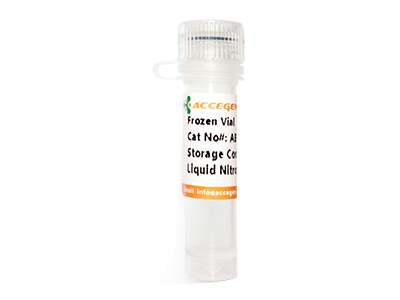
For research use only
| Cat No. | ABC-X0635F |
| Product Type | Overexpression Stable Cell Lines |
| Cell Type | Epithelial |
| Species | Hamster |
| Host Cell | CHO-K1 |
| Source Organ | Ovary |
| Disease | Normal |
| Storage | Liquid Nitrogen |
Leverage IGF-1R CHO-K1 Cell Line, ideal for studying EGFR signaling and receptor tyrosine kinase functions in cell proliferation and differentiation.
EGFR is a member of the receptor tyrosine kinase (TK) family. It is widely distributed on the surface of mammalian fibroblasts, epithelial cells, and other cell types, and the EGFR signaling pathway plays an important role in physiological processes such as cell proliferation and differentiation. When mutations occur in EGFR, it leads to the persistent activation of the EGFR signaling pathway even in the absence of ligand binding, resulting in abnormal cell proliferation. EGFR mutations have been identified in various tumors, such as non-small cell lung cancer, breast cancer, colorectal cancer, and head and neck squamous cell carcinoma (HNSCC). There are several tyrosine kinase inhibitors (TKI) targeting EGFR mutations.BA/F3 cells are a type of IL-3-dependent precursor B cell, and certain protein kinases can replace IL-3 to support the growth of BA/F3 cells. By using inhibitors to antagonize this effect, this characteristic can be utilized for research on kinase inhibitors.
| Species | Hamster |
| Cat.No | ABC-X0635F |
| Quality Control | All cells test negative for mycoplasma, bacteria, yeast, and fungi. |
| Product Category | Transfected Stable Cell Lines |
| Size/Quantity | 1 vial |
| Cell Type | Epithelial |
| Growth Mode | Adherent |
| Shipping Info | Dry Ice |
| Growth Conditions | 37 ℃, 5% CO2 |
| Source Organ | Ovary |
| Disease | Normal |
| Biosafety Level | 1 |
| Storage | Liquid Nitrogen |
| Product Type | Overexpression Stable Cell Lines |
| Host Cell | CHO-K1 |
For research use only
When you publish your research, please cite our product as “AcceGen Biotech Cat.# XXX-0000”. In return, we’ll give you a $100 coupon. Simply click here and submit your paper’s PubMed ID (PMID).