



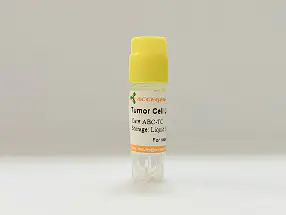
For research use only
| Cat No. | ABC-TC0561 |
| Product Type | Human Esophageal Cancer Cell Lines |
| Cell Type | Epithelial |
| Species | Human |
| Growth Conditions | 37 ℃, 5% CO2 |
| Source Organ | Oesophagus |
| Disease | Esophageal Squamous Cell Cancer |
| Product Code | KYSE 270; KYSE-270; Kyse270; KY-270 |
KYSE270 Cell Line is a human esophageal squamous cell carcinoma model widely used for oncology, drug screening, and molecular biology studies.
KYSE270 is a human esophageal squamous cell carcinoma (ESCC) cell line originally established from a poorly differentiated tumor resected from the esophagus of a 79-year-old Japanese male. These cells exhibit polygonal, epithelial-like morphology and grow as adherent monolayers in vitro. KYSE270 cells display a moderate proliferation rate and are widely used for in vitro modeling of ESCC pathogenesis and drug response. Cytogenetic analysis shows extensive chromosomal abnormalities, including structural rearrangements and aneuploidy typical of ESCC. Genomic profiling has revealed a TP53 mutation and dysregulated EGFR expression. The cell line is tumorigenic in immunodeficient mice and forms moderately differentiated squamous cell tumors in vivo. The cells undergo rigorous screening and isolation procedures, and are rigorously tested to ensure they are free of contamination from HIV-1, HBV, HCV, Syphilis, Mycoplasma, Fungi, Yeast, and Bacteria.
| Product Code | KYSE 270; KYSE-270; Kyse270; KY-270 |
| Species | Human |
| Cat.No | ABC-TC0561 |
| Product Category | Tumor Cell Lines |
| Size/Quantity | 1 vial |
| Cell Type | Epithelial |
| Growth Mode | Adherent |
| Shipping Info | Dry Ice |
| Growth Conditions | 37 ℃, 5% CO2 |
| Source Organ | Oesophagus |
| Disease | Esophageal Squamous Cell Cancer |
| Biosafety Level | 1 |
| Storage | Liquid Nitrogen |
| Product Type | Human Esophageal Cancer Cell Lines |
KYSE270 is an established model for studying esophageal squamous cell carcinoma biology, including gene expression, drug resistance mechanisms, and tumor microenvironment interactions. It is frequently used for testing chemotherapeutic agents, evaluating EGFR pathway inhibitors, and identifying molecular biomarkers for ESCC progression and treatment response. Due to its well-characterized genetic alterations and tumorigenicity, KYSE270 also supports preclinical investigations into targeted therapies and resistance reversal.
When you publish your research, please cite our product as “AcceGen Biotech Cat.# XXX-0000”. In return, we’ll give you a $200 coupon. Simply click here and submit your paper’s PubMed ID (PMID).