



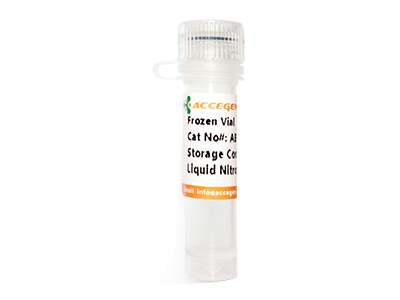
For research use only
| Cat No. | ABC-GF0045 |
| Product Type | Others |
Basic fibroblast growth factor (bFGF), also known as FGF-β, is a growth factor that exists in the extracellular matrix and is encoded by the FGF2 gene.
Basic fibroblast growth factor (bFGF) is a member of the fibroblast growth factor (FGF) family, which is a growth factor and signaling protein encoded by the FGF2 gene. FGF family members have a wide range of activities that promote mitosis and cell survival, and are involved in various biological processes including embryonic development, cell growth, morphogenesis, tissue repair, tumor growth, and invasion. In normal tissues, bFGF exists in the extracellular matrix beneath the basement membrane and vascular endothelium. bFGF can stimulate and regulate the differentiation and proliferation of various cells originating from the mesoderm and neuroectoderm, including vascular endothelial cells, epithelial cells, myoblasts, osteoblasts, and glial cells. FGF-2 plays an important role in embryonic development and tissue healing. bFGF is the fundamental component that maintains pluripotency in all embryonic and induced pluripotent stem cell culture media.
| Species | Human |
| Cat.No | ABC-GF0045 |
| Product Category | Cell Culture Media, kits & Reagents |
| Size/Quantity | 10 μg, 50 μg, 100 μg, 1 mg |
| Storage | -80°C |
| Product Type | Others |
| Concentration | > 95% as determined by SDS-PAGE and HPLC. |
| Buffer Mix | It is recommended to reconstitute Human FGF2 in sterile PBS to a concentration of 0.1–1.0 mg/mL. Repeated freeze-thaw cycles should be avoided. |
| Key Features | < 0.01 EU per μg by the LAL method |
FGF plays a crucial role by promoting the proliferation and differentiation of various cell types, including fibroblasts and endothelial cells.