

For research use only
| Cat No. | ABC-X0314C |
| Product Type | Overexpression Stable Cell Lines |
| Cell Type | Hepatoma Cell |
| Species | Human |
| Host Cell | H22 |
| Source Organ | Liver |
| Disease | Hepatocellular carcinoma |
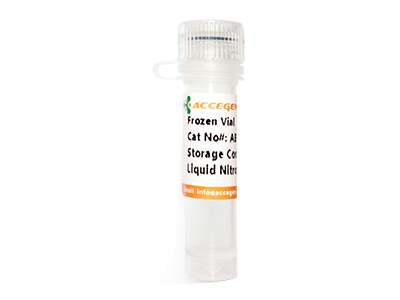
| Storage | Liquid Nitrogen |
Human PD-1 stably expressed in H22 cells, designed for immune checkpoint inhibition assays, T cell dysfunction analysis, and immunotherapy research use.
Xpress™ Human PD1 Overexpression Cell Line is a genetically engineered model derived from selected murine hepatoma (H22) parental cell line based on customers’ requirement. PD1 H22 overexpression cell line is generated by stable integration of exogenous human PD1 into H22 host cells using our optimized transduction of lentiviral vectors. Overexpression clone is validated at gene level by qRT-PCR.
Target
The PD1 gene encodes a key immune checkpoint receptor expressed on activated T cells, regulating immune tolerance and preventing autoimmunity. It binds PD-L1 and PD-L2, leading to T cell exhaustion. PD1 is a crucial target in cancer immunotherapy, particularly in solid tumors and lymphomas. AcceGen offers generation of stable overexpression cell lines targeting any gene of your interest. Polyclonal or monoclonal is optional based on customers’ research needs.
| Species | Human |
| Cat.No | ABC-X0314C |
| Product Category | Transfected Stable Cell Lines |
| Size/Quantity | 1 vial |
| Cell Type | Hepatoma Cell |
| Growth Mode | Suspension |
| Shipping Info | Dry Ice |
| Growth Conditions | 37 °C, 5% CO2 |
| Source Organ | Liver |
| Disease | Hepatocellular carcinoma |
| Biosafety Level | 1 |
| Storage | Liquid Nitrogen |
| Product Type | Overexpression Stable Cell Lines |
| Host Cell | H22 |
| Quality Control | All cells test negative for mycoplasma, bacteria, yeast, and fungi. |
The PD1 H22 Overexpression Cell Line serves as a powerful tool for studying PD1 signaling and immune checkpoint blockade. It is widely used in immuno-oncology for evaluating anti-PD1 monoclonal antibodies and exploring immune evasion mechanisms.