



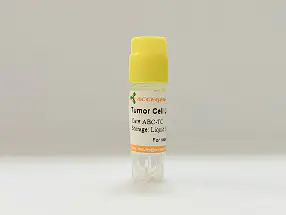
For research use only
| Cat No. | ABC-TC0036 |
| Product Type | Canine Thigh Tumor Cell Lines |
| Cell Type | Fibroblast |
| Species | Canis Familiaris |
| Growth Conditions | 37 ℃, 5% CO2 |
| Disease | Canine Neoplasm |
| Product Code | A 72; A72 |
A-72 canine tumor cells enable veterinary oncology research, tumor growth assessment, metastatic behavior analysis, and anticancer drug screening.
A-72 is a fibroblast-like canine tumor cell line derived from a thigh tumor of an 8-year-old female Golden Retriever with a prior history of mammary adenocarcinoma. Although the histological subtype of the tumor remains unspecified, A-72 exhibits adherent growth and elongated mesenchymal morphology consistent with fibroblastic lineage. Cytogenetic analysis reveals a canine karyotype with structural abnormalities associated with neoplastic progression and immortalization. The line is tumorigenic in immunocompromised mice but shows limited metastatic capacity. A-72 is permissive for multiple canine viruses including canine adenovirus types I and II, herpesvirus, and coronavirus, making it a valuable model in veterinary virology. The cell line is validated for identity, free of mycoplasma and adventitious canine viruses, and is widely used in both oncology and infectious disease research involving canine systems. The cells undergo rigorous screening and isolation procedures, and are rigorously tested to ensure they are free of contamination from Mycoplasma, Fungi, Yeast, and Bacteria.
| Product Code | A 72; A72 |
| Species | Canis Familiaris |
| Cat.No | ABC-TC0036 |
| Product Category | Tumor Cell Lines |
| Size/Quantity | 1 vial |
| Cell Type | Fibroblast |
| Growth Mode | Adherent |
| Shipping Info | Dry Ice |
| Growth Conditions | 37 ℃, 5% CO2 |
| Disease | Canine Neoplasm |
| Biosafety Level | 1 |
| Storage | Liquid Nitrogen |
| Product Type | Canine Thigh Tumor Cell Lines |
A-72 is widely employed in veterinary oncology and comparative cancer biology as an in vitro model for soft tissue neoplasms of canine origin. Its fibroblastic properties enable studies of tumor-stromal interactions, extracellular matrix remodeling, and fibrosis-related signaling. Additionally, A-72’s susceptibility to multiple canine viruses supports applications in viral pathogenesis, oncolytic virotherapy, and vaccine development. The cell line also provides a translational bridge for evaluating anticancer agents or immunomodulators in canine-specific contexts. A-72 serves as a reproducible and accessible system for elucidating mechanisms of tumor initiation, viral-host interaction, and therapeutic response in canine and cross-species research models.
When you publish your research, please cite our product as “AcceGen Biotech Cat.# XXX-0000”. In return, we’ll give you a $200 coupon. Simply click here and submit your paper’s PubMed ID (PMID).