



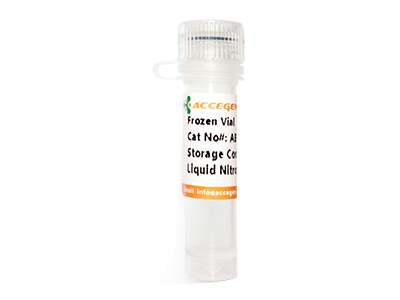
For research use only
| Cat No. | ABC-RC151F |
| Product Type | Reporter Stable Cell Lines |
| Cell Type | Epithelial |
| Species | Human |
| Host Cell | HEK293 |
| Source Organ | Kidney |
| Disease | Normal |
| Storage | Liquid Nitrogen |
Activin A Reporter Cell Line enables sensitive monitoring of TGF-beta/Activin signaling for stem cell, developmental, and drug discovery research.
ActRIIA (ACVR2A) and ActRIIB (ACVR2B) are members of the transforming growth factor β (TGF-β) receptor family, including activin A, activin B, BMP7, BMP9, BMP10, GDF1, GDF8 (myostatin), GDF11, and Nodal. ALK4 and ALK7 are principal type I TGF-β receptor family members for activin A and activin B, respectively. Bimagrumab is a human monoclonal antibody that can block the activin II type receptor (ActRII) to regulate skeletal muscle growth.Activin A Reporter Cell Line is a luciferase reporter gene cell line that uses Activin A as the agonist for activity detection (specifically for Activin A activity; does not differentiate between ACVR2A and ACVR2B). When Activin A binds to the receptor, it activates the signal pathway, leading to the expression of luciferase, with luciferase readings representing the activation effect of the signal pathway. Moreover, this activation effect can also be blocked by inhibitory antibodies such as Bimagrumab, making it suitable for evaluating the effects of related drugs in vitro.
| Species | Human |
| Cat.No | ABC-RC151F |
| Quality Control | All cells test negative for mycoplasma, bacteria, yeast, and fungi. |
| Product Category | Transfected Stable Cell Lines |
| Size/Quantity | 1 vial |
| Cell Type | Epithelial |
| Growth Mode | Adherent |
| Shipping Info | Dry Ice |
| Growth Conditions | 37 ℃, 5% CO2 |
| Source Organ | Kidney |
| Disease | Normal |
| Biosafety Level | 1 |
| Storage | Liquid Nitrogen |
| Product Type | Reporter Stable Cell Lines |
| Host Cell | HEK293 |
For research use only
When you publish your research, please cite our product as “AcceGen Biotech Cat.# XXX-0000”. In return, we’ll give you a $100 coupon. Simply click here and submit your paper’s PubMed ID (PMID).