



For research use only
| Cat No. | ABC-TC5598 |
| Product Type | Mouse Embryo Cell Lines |
| Cell Type | Epithelial-like |
| Species | Mouse |
| Growth Conditions | 37 ℃, 5% CO2 |
| Source Organ | Embryo |
| Product Code | ATDC-5 |
Uncover the potential of ATDC5 cells in chondrogenesis, including their response to BMP-2 stimulation and PTH inhibition during differentiation stages.
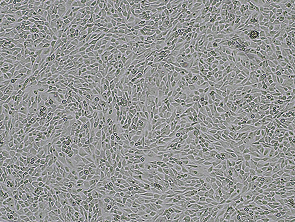
ATDC5 is a mouse chondrogenic cell line derived from teratocarcinoma AT805. These adherent cells exhibit fibroblast-like morphology initially and a fibroblast-like appearance under standard culture. ATDC5 uniquely undergoes sequential differentiation in vitro, transitioning from mesenchymal condensation to cartilage formation and calcification. Upon reaching confluence, proliferation ceases and nodules resembling cartilage form. This differentiation is marked by early chondrocytic markers including type II collagen and aggrecan, followed by hypertrophic chondrocyte markers such as type X collagen and matrix mineralization. Bone morphogenetic protein-2 (BMP-2) can stimulate both early and late differentiation of ATDC5 cells, while activation of the parathyroid hormone (PTH)/PTH-related peptide (PTHrP) receptor can inhibit this differentiation potential. Due to this well-defined differentiation process, ATDC5 serves as an established model for investigating chondrogenesis, cartilage development, and related molecular mechanisms.
| Product Code | ATDC-5 |
| Species | Mouse |
| Cat.No | ABC-TC5598 |
| Product Category | Tumor Cell Lines |
| Size/Quantity | 1 vial |
| Cell Type | Epithelial-like |
| Growth Mode | Adherent |
| Shipping Info | Dry Ice |
| Growth Conditions | 37 ℃, 5% CO2 |
| Source Organ | Embryo |
| Biosafety Level | 1 |
| Storage | Liquid Nitrogen |
| Product Type | Mouse Embryo Cell Lines |
ATDC5 is a well-established model for studying chondrogenesis, cartilage formation, and skeletal development. It is widely used to explore chondrocyte differentiation and test therapeutic strategies for cartilage-related diseases. This cell line also supports research on signaling pathways and biomaterial interactions relevant to skeletal tissue engineering.
When you publish your research, please cite our product as “AcceGen Biotech Cat.# XXX-0000”. In return, we’ll give you a $200 coupon. Simply click here and submit your paper’s PubMed ID (PMID).