



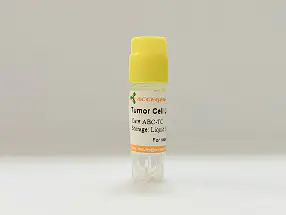
For research use only
| Cat No. | ABC-TC0247 |
| Product Type | Mouse Teratocarcinoma Cell Lines |
| Species | Mouse-Male |
| Growth Conditions | 37 ℃, 5% CO2 |
| Source Organ | Embryo |
| Product Code | F-9, F 9, f9 |
F9 cells can be stimulated to differentiate into parietal endoderm in the presence of retinoic acid and dibutyryl cyclic AMP (cAMP).
F9 is a murine embryonal carcinoma (EC) stem cell line originally isolated from the testis of a male Mus musculus diagnosed with embryonal testicular teratoma. This cell line exhibits an epithelial-like morphology with cells displaying a characteristic cuboidal to columnar shape. It grows as an adherent monolayer culture. F9 cells express key molecular markers including plasminogen activator, laminin, and type IV collagen. These cells demonstrate robust tumorigenic potential in vivo. The cells undergo rigorous screening and isolation procedures, and are rigorously tested to ensure they are free of contamination from Mycoplasma, Fungi, Yeast, and Bacteria.
| Product Code | F-9, F 9, f9 |
| Species | Mouse-Male |
| Cat.No | ABC-TC0247 |
| Product Category | Tumor Cell Lines |
| Size/Quantity | 1 vial |
| Growth Mode | Adherent |
| Shipping Info | Dry Ice |
| Growth Conditions | 37 ℃, 5% CO2 |
| Source Organ | Embryo |
| Biosafety Level | 1 |
| Storage | Liquid Nitrogen |
| Product Type | Mouse Teratocarcinoma Cell Lines |
F9 cells serve as a valuable in vitro model for studying cellular differentiation mechanisms and cancer biology. The cells are extensively utilized to investigate molecular pathways underlying embryonic development and carcinogenesis, particularly through their well-characterized differentiation into parietal endoderm upon treatment with retinoic acid and cyclic AMP. This application enables research into extracellular matrix component synthesis and gene regulation during differentiation, providing critical insights for cancer research and developmental biology studies.
When you publish your research, please cite our product as “AcceGen Biotech Cat.# XXX-0000”. In return, we’ll give you a $200 coupon. Simply click here and submit your paper’s PubMed ID (PMID).