



For research use only
| Cat No. | ABC-TC0197 |
| Product Type | Mouse Colon Cell Lines |
| Species | Mouse |
| Growth Conditions | 37 ℃, 5% CO2 |
| Product Code | CT26; CT 26; Colon Tumor 26 |
CT-26: Tumorigenic, undifferentiated mouse colon carcinoma cell line.Ideal for cancer vaccine studies.
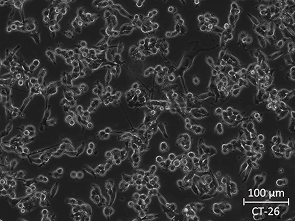
CT26 is a murine colon carcinoma cell line established from a chemically induced tumor in BALB/c mice. These adherent cells exhibit spindle-shaped morphology and are highly tumorigenic, forming aggressive CT26 tumor in syngeneic hosts. CT26 cells express epithelial markers and harbor oncogenic mutations, including in the KRAS gene, contributing to their malignant phenotype. Their robust growth and ability to evoke immune responses make them a widely used model in cancer immunology, particularly for evaluating checkpoint inhibitors, adoptive cell therapies, and tumor-host interactions. CT26 serves as a well-recognized CT26 model and standard syngeneic system for preclinical studies of colorectal cancer and immuno-oncology in immunocompetent mice.
| Product Code | CT26; CT 26; Colon Tumor 26 |
| Species | Mouse |
| Cat.No | ABC-TC0197 |
| Product Category | Tumor Cell Lines |
| Size/Quantity | 1 vial |
| Shipping Info | Dry Ice |
| Growth Conditions | 37 ℃, 5% CO2 |
| Biosafety Level | 1 |
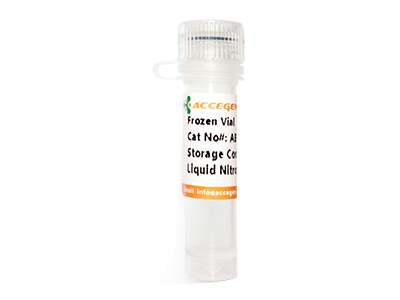
| Storage | Liquid Nitrogen |
| Product Type | Mouse Colon Cell Lines |
CT26 cells establish syngeneic mouse tumor models for studying tumor growth, metastasis, and the microenvironment while enabling immunotherapy research through immune response analysis and immunomodulatory agent efficacy testing. They support molecular studies via genetic manipulation to explore cancer mechanisms and drug discovery for colorectal cancer pathways. These cells further facilitate understanding of tumor microenvironment interactions and immune checkpoint roles in tumor progression and inhibitor efficacy.
When you publish your research, please cite our product as “AcceGen Biotech Cat.# XXX-0000”. In return, we’ll give you a $200 coupon. Simply click here and submit your paper’s PubMed ID (PMID).