



Tumor Cell Lines

DH82

  • For research use only

Cat No.

ABC-TC0209

Product Type

Canine Macrophage Cell Lines

Cell Type

Macrophage

Species

Canis Familiaris

Growth Conditions

37 ℃, 5% CO2

Product Code

DH-82; DH 82

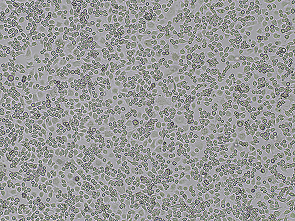
DH82, from a Golden Retriever with histiocytosis, shows macrophage morphology, phagocytizes particles, expresses Fc gamma receptor, no IL-1.

Product Image

Description

DH82 cell line, derived from a 10-year-old male Golden Retriever with malignant histiocytosis, serving as a valuable model for studying monocyte/macrophage biology and immune responses. These cells exhibit macrophage-like morphology and semi-adherent growth, with some cells in suspension. These cells are phagocytic, capable of ingesting latex particles and antibody-coated pathogens via Fc gamma receptors (FcγR), but lack Fc mu (IgM) and C3b receptors, limiting complement-mediated uptake. Unlike primary macrophages, DH82 cells do not produce IL-1, reducing confounding inflammatory signals in immune studies. Its tumorigenicity has been confirmed in xenograft models forming subcutaneous lesions in immunodeficient mice following implantation. Their unique receptor profile makes them ideal for investigating antibody-dependent phagocytosis without interference from complement or IgM pathways. DH82 is widely used in canine immunology research, particularly for studying histiocytic diseases, vaccine responses, and macrophage function.

Product Code

DH-82; DH 82

Species

Canis Familiaris

Cat.No

ABC-TC0209

Product Category

Tumor Cell Lines

Size/Quantity

1 vial

Cell Type

Macrophage

Growth Mode

Suspension

Shipping Info

Dry Ice

Growth Conditions

37 ℃, 5% CO2

Biosafety Level

1

Storage

Liquid Nitrogen

Product Type

Canine Macrophage Cell Lines

Application

  • DH82 cells are widely used as an in vitro model for canine histiocytic sarcoma and immunological research, including studies of macrophage function, receptor‑mediated phagocytosis, and Fc‑gamma receptor biology. They also serve as a host cell model for studying Ehrlichia canis infection and canine tick‑borne disease pathogenesis. In addition, specific applications include studying intracellular pathogen mechanisms (e.g., Leishmania infection), assessing nanoparticle uptake and toxicity, and modeling inflammatory responses through cytokine profiling. Moreover, DH82 cells are used in toxicology studies to examine the effects of environmental toxins on immune cell function.

Citation

When you publish your research, please cite our product as “AcceGen Biotech Cat.# XXX-0000”. In return, we’ll give you a $200 coupon. Simply click here and submit your paper’s PubMed ID (PMID).

Inquiring DH82

We know how valuable your research is to you, but are you wondering what you can expect to pay for quick accurate results every time? Fill out a request in the form below and we’ll get back to you within 24 hours with a quote.
High Viability
To succeed in cell culture
Precision and Reliability
To support a consistent result
Customization Options
Tailed to your research

Tags

AcceGen Scroll Top Button