



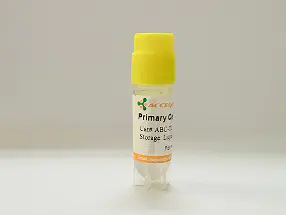
For research use only
| Cat No. | ABC-TC3408 |
| Product Type | Other Animal Primary Cells |
| Cell Type | Red Blood Cell |
| Species | Dog |
| Growth Conditions | 37 ℃, 5% CO2 |
| Source Organ | Blood |
| Disease | Normal |
| Storage | Liquid Nitrogen |
Dog Red Blood Cells, stabilized by glutaraldehyde, are suitable for hemocompatibility testing, blood typing methods, and veterinary immunoassays.
Dog Red Blood Cells (RBCs) are derived from hematopoietic stem cells in the bone marrow and are formed through a series of differentiation and maturation processes. Morphologically, mature canine RBCs are biconcave disc-shaped, without nuclei. Canine RBCs contain hemoglobin composed of α- and β-globin chains, as well as membrane proteins such as band 3 proteins and blood group–associated glycoproteins, which are involved in gas transport, membrane integrity, and cell stability. These dog blood cells facilitate studies of oxygen and carbon dioxide transport, acid-base regulation, and membrane biology. Such dog cells support hematology research, veterinary studies, and comparative physiology to investigate cellular mechanisms and systemic functions. Each lot undergoes rigorous screening and isolation procedures, and is rigorously tested to ensure it is free of contamination from Mycoplasma, Fungi, Yeast, and Bacteria.
| Product Code | Dog Red Blood Cells, Dog Red Blood Cells, Red Blood Cells, Erythrocytes, RBCs, Dog RBCs |
| Species | Dog |
| Cat.No | ABC-TC3408 |
| Product Category | Primary Cells |
| Size/Quantity | 1 vial |
| Cell Type | Red Blood Cell |
| Growth Mode | Suspension |
| Shipping Info | Dry Ice |
| Growth Conditions | 37 ℃, 5% CO2 |
| Source Organ | Blood |
| Disease | Normal |
| Biosafety Level | 1 |
| Storage | Liquid Nitrogen |
| Product Type | Other Animal Primary Cells |
| Quality Control | All cells test negative for mycoplasma, bacteria, yeast, and fungi. |
Dog Red Blood Cells are commonly used in routine blood tests in veterinary clinical practice. Indicators such as red blood cell count (RBC), hemoglobin concentration (HGB), and hematocrit (HCT) are measured to assess conditions like anemia, dehydration, or blood disorders. These cells can also serve as model cells for researching hemolytic diseases (e.g., immune-mediated hemolytic anemia) or red blood cell membrane defects (e.g., hereditary spherocytosis).
When you publish your research, please cite our product as “AcceGen Biotech Cat.# XXX-0000”. In return, we’ll give you a $200 coupon. Simply click here and submit your paper’s PubMed ID (PMID).