



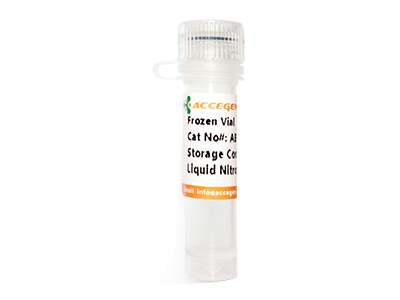
For research use only
| Cat No. | ABC-TC525S |
| Product Type | Human Lung Cancer Cell Lines |
| Cell Type | Epithelial |
| Species | Human |
| Growth Conditions | 37 ℃, 5% CO2 |
| Source Organ | Lung |
| Disease | Papillary Adenocarinoma |
| Product Code | H441; H-441; NCI-H441-4; NCI-441; NCIH441 |
H441 is a human lung adenocarcinoma line with epithelial morphology, KRAS mutation (p.G12V), hyperdiploid karyotype, used in lung cancer studies.
The H441 cell line is a human pulmonary adenocarcinoma cell line isolated in 1982 from the pericardial fluid of a 62-year-old male patient with papillary adenocarcinoma of the lung. These epithelial-like cells exhibit a cuboidal to polygonal morphology and can be cultured as an adherent monolayer, allowing continuous passaging in vitro. H441 cells possess characteristics of Clara cells and type II alveolar epithelial cells, making them a valuable model for studying lung biology and respiratory diseases. They express key epithelial markers such as cytokeratins and surfactant proteins, including surfactant protein A (SP-A) and surfactant protein B (SP-B), which are important for lung function. Additionally, H441 cells display tight junction proteins like occludin and claudins, contributing to barrier properties. Their capacity to produce surfactants and express cytochrome P450 enzymes further supports their use in pulmonary toxicology and drug metabolism research.
| Product Code | H441; H-441; NCI-H441-4; NCI-441; NCIH441 |
| Species | Human |
| Cat.No | ABC-TC525S |
| Product Category | Tumor Cell Lines |
| Size/Quantity | 1 vial |
| Cell Type | Epithelial |
| Growth Mode | Adherent |
| Shipping Info | Dry Ice |
| Growth Conditions | 37 ℃, 5% CO2 |
| Source Organ | Lung |
| Disease | Papillary Adenocarinoma |
| Biosafety Level | 1 |
| Storage | Liquid Nitrogen |
| Product Type | Human Lung Cancer Cell Lines |
The H441 cell line serves as a versatile tool in multiple research fields. In the study of human lung adenocarcinoma, it helps elucidate alterations in intermediate filament protein expression. As a type II pneumocyte cell line in alveolar models, it enables the examination of oxidative stress and pro-inflammatory responses triggered by heated tobacco products. Moreover, it is widely used in transfection experiments to express pulmonary surfactant protein SP-B, contributing to a better understanding of pulmonary physiology and disease.
When you publish your research, please cite our product as “AcceGen Biotech Cat.# XXX-0000”. In return, we’ll give you a $200 coupon. Simply click here and submit your paper’s PubMed ID (PMID).