



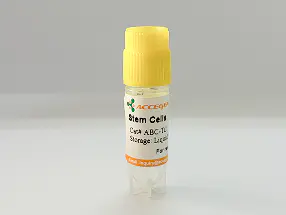
For research use only
| Cat No. | ABC-SC0129T |
| Product Type | Human Adult Stem Cells |
| Cell Type | Stem Cell |
| Species | Human |
| Growth Conditions | 37 ℃, 5% CO2 |
| Source Organ | Adipose |
| Disease | Normal |
| Storage | Liquid Nitrogen |
Adipose derived Adult Stem Cells
HighQC™ Adipose Derived Adult Stem Cells (ADSCs) are adult stem cells isolated from human adipose tissue. These cells exhibit robust proliferative capacity and maintain classical stem cell markers, including CD73, CD90, and CD105. Morphologically, ADSCs display a spindle-shaped, fibroblast-like appearance, grow as adherent monolayers, and can be expanded over multiple passages while maintaining self-renewal and multipotent differentiation potential. Functionally, ADSCs are capable of differentiating into osteogenic, chondrogenic, and adipogenic lineages, with additional potential for neural-like or endothelial-like differentiation under specialized conditions. The cells undergo rigorous screening and isolation procedures, and are rigorously tested to ensure they are free of contamination from HIV-1, HBV, HCV, Syphilis, Mycoplasma, Fungi, Yeast, and Bacteria.
| Product Code | HighQC™ Adipose Derived Adult Stem Cell, hAdipose-ASC, Human Adipose Derived Stem Cells |
| Species | Human |
| Cat.No | ABC-SC0129T |
| Product Category | Stem Cells |
| Size/Quantity | 1 vial |
| Cell Type | Stem Cell |
| Growth Mode | Adherent |
| Shipping Info | Dry Ice |
| Growth Conditions | 37 ℃, 5% CO2 |
| Source Organ | Adipose |
| Disease | Normal |
| Storage | Liquid Nitrogen |
| Product Type | Human Adult Stem Cells |
HighQC™ Adipose Derived Adult Stem Cells, also known as human adipose-derived stem cells (ADSC) and adipose mesenchymal stem cells (ASC), represent primary human ADSCs and provide a reliable in vitro platform for investigating stem cell biology, self-renewal, and lineage differentiation mechanisms. These cells are widely used to study osteogenic, chondrogenic, and adipogenic differentiation, as well as directed differentiation into neural-like and endothelial-like lineages under defined experimental conditions. ADSCs also serve as a model to explore cellular signaling pathways, gene regulation, and tissue regeneration mechanisms, making them a versatile tool for functional genomics, mechanistic studies, and basic research in regenerative and developmental biology.
When you publish your research, please cite our product as "AcceGen Biotech Cat.# XXX-0000". In return, we’ll give you a $200 coupon. Simply click here and submit your paper’s PubMed ID (PMID).