



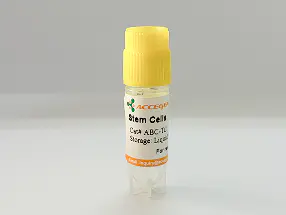
For research use only
| Cat No. | ABC-TC3488 |
| Product Type | Human Mesenchymal Stem Cells |
| Cell Type | Mesenchymal Stromal Cell |
| Species | Human |
| Growth Conditions | 37 ℃, 5% CO2 |
| Source Organ | Amniotic |
| Disease | Normal |
| Storage | Liquid Nitrogen |
HighQC™ Human Amniotic Mesenchymal Stromal Cells support regenerative studies, inflammation research, and differentiation toward mesodermal cell lineages.
HighQC™ Human Amniotic Mesenchymal Stromal Cells (HAMSCs) are isolated from the mesenchymal layer of the human amniotic membrane, a fetal tissue with immune-privileged properties. These adherent cells exhibit fibroblast-like morphology and demonstrate strong proliferative potential. HAMSCs express classical mesenchymal markers CD73, CD90, and CD105. They can differentiate into adipocytes, chondrocytes, osteoblasts, and cardiomyocyte-like cells under lineage-specific induction. HAMSCs are also known to secrete anti-inflammatory and anti-angiogenic factors, and maintain a normal karyotype with low immunogenicity. These properties make HAMSCs a promising tool for regenerative medicine and cellular therapy research. Each lot undergoes rigorous screening and isolation procedures, and is rigorously tested to ensure it is free of contamination from HIV-1, HBV, HCV, syphilis, mycoplasma, fungi, yeast, and bacteria.
| Product Code | HighQC™ Human Amniotic Mesenchymal Stromal Cells, Amniotic MSCs Human, hAMSCs, Human Amnion Derived MSCs, Amniotic Mesenchymal Stem Cells |
| Species | Human |
| Cat.No | ABC-TC3488 |
| Product Category | Stem Cells |
| Size/Quantity | 1 vial |
| Cell Type | Mesenchymal Stromal Cell |
| Growth Mode | Adherent |
| Shipping Info | Dry Ice |
| Growth Conditions | 37 ℃, 5% CO2 |
| Source Organ | Amniotic |
| Disease | Normal |
| Biosafety Level | 1 |
| Storage | Liquid Nitrogen |
| Product Type | Human Mesenchymal Stem Cells |
HighQC™ Human Amniotic Mesenchymal Stromal Cells are widely used in regenerative medicine studies focused on bone, cartilage, tendon, and cardiac tissue repair. Their immune-modulatory secretome makes them suitable for inflammation-related disease modeling and transplant immunology. These cells are also employed in wound healing assays, ischemic tissue regeneration, and drug toxicity screening, providing advantages in tissue engineering platforms and cell-based therapeutic development.
When you publish your research, please cite our product as "AcceGen Biotech Cat.# XXX-0000". In return, we’ll give you a $200 coupon. Simply click here and submit your paper’s PubMed ID (PMID).