



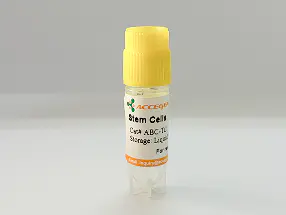
For research use only
| Cat No. | ABC-SC0009T |
| Product Type | Human iPSCs |
| Cell Type | Induced Pluripotent Stem Cell |
| Species | Human |
| Growth Conditions | 37 ℃, 5% CO2 |
| Source Organ | PBMC |
| Disease | Diabetes Type II |
| Storage | Liquid Nitrogen |
HighQC™ Human IPS Cell (IPSC From PBMC/ Diabetes Type II/ Episomal) enables T2D and Parkinson’s modeling for regenerative research and drug screening.
HighQC™ Human iPSCs (iPSC From PBMC/ Diabetes Type II/ Episomal) are disease-specific induced pluripotent stem cells derived from peripheral blood mononuclear cells (PBMCs) of a Type 2 Diabetes Mellitus (T2D) donor. Reprogramming was performed via episomal delivery of defined transcription factors and reprogramming enhancers, ensuring genomic integrity without integration. These integration-free iPSCs express cell surface markers, including SSEA-4 and TRA-1-81, and pluripotency markers, including POU5F1 and NANOG. The cells are capable of differentiating into glucose-responsive pancreatic β-cells, making them a valuable resource for diabetes research. The cells undergo rigorous screening and isolation procedures, and are rigorously tested to ensure they are free of contamination from HIV-1, HBV, HCV, syphilis, mycoplasma, fungi, yeast, and bacteria.
| Product Code | HighQC™ Human IPS Cell (IPSC From PBMC/ Diabetes Type II/ Episomal), Human iPSC-PBMC-T2D, hIPSC-PBMC-T2D, Human PBMC Derived iPSC Type II Diabetes |
| Species | Human |
| Cat.No | ABC-SC0009T |
| Product Category | Stem Cells |
| Size/Quantity | 1 vial |
| Cell Type | Induced Pluripotent Stem Cell |
| Growth Mode | Adherent |
| Shipping Info | Dry Ice |
| Growth Conditions | 37 ℃, 5% CO2 |
| Source Organ | PBMC |
| Disease | Diabetes Type II |
| Storage | Liquid Nitrogen |
| Product Type | Human iPSCs |
HighQC™ Human iPSCs (iPSC From PBMC/ Diabetes Type II/ Episomal) serve as a robust in vitro model for investigating the pathophysiological mechanisms of Type 2 Diabetes Mellitus (T2DM). They are highly suitable for applications in drug screening to identify potential pharmacological compounds and for gene editing studies aimed at elucidating specific gene contributions to T2DM pathogenesis and associated complications.
When you publish your research, please cite our product as "AcceGen Biotech Cat.# XXX-0000". In return, we’ll give you a $200 coupon. Simply click here and submit your paper’s PubMed ID (PMID).