



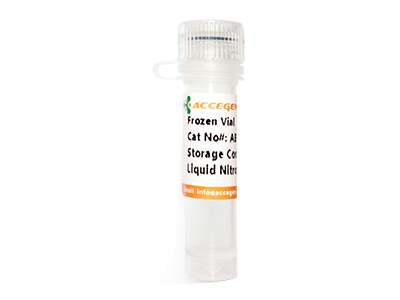
For research use only
| Cat No. | ABC-SC221Y |
| Product Type | IPSC-derived |
| Cell Type | Astrocytes |
| Species | Human |
| Growth Conditions | 37 ℃, 5% CO2 |
| Source Organ | Induced pluripotent stem cell |
| Disease | Normal |
| Storage | Liquid Nitrogen |
Human iPSC-derived Astrocytes PSEN2 mutant, N141I,HET for neurodegeneration studies, verified genotype, ready for culture and assays, in vitro.
HighQC™ Human iPSC‑derived Astrocytes PSEN2 mutant, N141I,HET are an essential tool for studying Alzheimer’s disease (AD) and related neurodegenerative disorders. These astrocytes are derived from human induced pluripotent stem cells (iPSCs) with the PSEN2 N141I mutation, a well-known genetic variant associated with early-onset familial Alzheimer’s disease. PSEN2 (presenilin 2) plays a critical role in the processing of amyloid precursor protein (APP), and mutations in this gene are linked to amyloid-beta plaque formation, a key hallmark of AD pathology. Accegen is proud to provide fully differentiated and functional human iPSC-derived human astrocytes that display typical astrocytic morphology and express key markers of e.g., GFAP, ALDH1L1. The cells undergo rigorous screening and isolation procedures, and are rigorously tested to ensure they are free of contamination from HIV-1, HBV, HCV, Syphilis, Mycoplasma, Fungi, Yeast, and Bacteria.
| Species | Human |
| Cat.No | ABC-SC221Y |
| Product Category | Stem Cells |
| Size/Quantity | 1 vial |
| Cell Type | Astrocytes |
| Growth Mode | Adherent |
| Shipping Info | Dry Ice |
| Growth Conditions | 37 ℃, 5% CO2 |
| Source Organ | Induced pluripotent stem cell |
| Disease | Normal |
| Biosafety Level | 1 |
| Storage | Liquid Nitrogen |
| Product Type | IPSC-derived |
| Quality Control | All cells test negative for mycoplasma, bacteria, yeast, and fungi. |
These iPSC-derived astrocytes closely mimic the function and characteristics of astrocytes in the human brain, providing a highly relevant model for studying glial cell involvement in AD, particularly neuroinflammation and glial dysfunction. Astrocytes play a critical role in neuronal support, synaptic function, and blood-brain barrier integrity, and their dysfunction has been implicated in the progression of Alzheimer’s disease. The PSEN2 N141I heterozygous mutation in these cells allows researchers to investigate the effects of the mutation on astrocyte function, neuroinflammation, and the interaction between glial cells and neurons in the context of Alzheimer’s disease.
When you publish your research, please cite our product as “AcceGen Biotech Cat.# XXX-0000”. In return, we’ll give you a $200 coupon. Simply click here and submit your paper’s PubMed ID (PMID).