



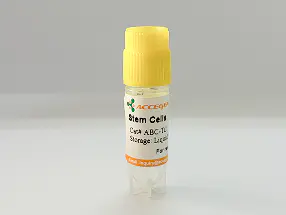
For research use only
| Cat No. | ABC-SC2029 |
| Product Type | Human iPSCs |
| Cell Type | Induced Pluripotent Stem Cell |
| Species | Human |
| Growth Conditions | 37 ℃, 5% CO2 |
| Source Organ | Fibroblast |
| Disease | Miller-Dieker Lissencephaly Syndrome |
| Storage | Liquid Nitrogen |
Cell Type: iPSC; Disease: Miller-Dieker Lissencephaly Syndrome; MDLS.
HighQC™ Human Induced Pluripotent Stem Cells (iPSCs) From Fibroblasts – Miller-Dieker Lissencephaly Syndrome are generated from human skin fibroblasts obtained from an individual affected by Miller-Dieker Lissencephaly Syndrome, a heritable neurodevelopmental disorder associated with chromosomal abnormalities. Morphologically, these cells display tight colony boundaries, high nuclear-to-cytoplasmic ratios, and clonal growth patterns. Reprogramming was performed using episomal vectors, which transiently express key human transcription factors to initiate the reprogramming process. These iPSCs exhibit pluripotency, with the ability to differentiate into all three germ layers under defined conditions, and express the pluripotency marker SSEA-4. The cells undergo rigorous screening and isolation procedures, and are rigorously tested to ensure they are free of contamination from HIV-1, HBV, HCV, Syphilis, Mycoplasma, Fungi, Yeast, and Bacteria.
| Product Code | HighQC™ Human IPSC From Fibroblast-Miller-Dieker Lissencephaly Syndrome, HighQC™ hiPSC MDS, hiPSC-MDS, HighQC™ Human Induced Pluripotent Stem Cells From Fibroblast-Miller-Dieker Lissencephaly Syndrome |
| Species | Human |
| Cat.No | ABC-SC2029 |
| Product Category | Stem Cells |
| Size/Quantity | 1 vial |
| Cell Type | Induced Pluripotent Stem Cell |
| Growth Mode | Adherent |
| Shipping Info | Dry Ice |
| Growth Conditions | 37 ℃, 5% CO2 |
| Source Organ | Fibroblast |
| Disease | Miller-Dieker Lissencephaly Syndrome |
| Storage | Liquid Nitrogen |
| Product Type | Human iPSCs |
HighQC™ Human iPSCs From Fibroblasts-Miller-Dieker Lissencephaly Syndrome (Miller-Dieker Syndrome iPSCs, Lissencephaly syndrome iPSC model, Human MDS patient-derived iPSCs) provide a valuable in vitro model for investigating chromosome abnormality–associated neurodevelopmental processes, particularly those involved in cortical development and neuronal migration. These cells support studies on gene dosage effects, chromatin regulation, and developmental signaling pathways underlying lissencephaly-related phenotypes. In addition, they are well suited for directed neural differentiation, disease modeling, and comparative transcriptomic analyses, enabling mechanistic research on how large-scale genomic alterations impact early human brain development under controlled experimental conditions.
When you publish your research, please cite our product as "AcceGen Biotech Cat.# XXX-0000". In return, we’ll give you a $200 coupon. Simply click here and submit your paper’s PubMed ID (PMID).