



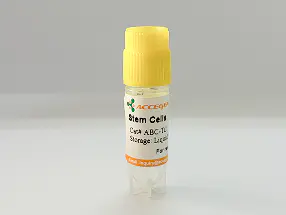
For research use only
| Cat No. | ABC-SC0015T |
| Product Type | Human iPSCs |
| Cell Type | Induced Pluripotent Stem Cell |
| Species | Human |
| Growth Conditions | 37 ℃, 5% CO2 |
| Source Organ | Foreskin |
| Disease | Skin Fibroblasts Of A Cystinosis |
| Storage | Liquid Nitrogen |
HighQC™ Human IPSC From Foreskin Fibroblast provides a cystinosis-specific model for disease mechanism study, cell differentiation, and drug screening.
HighQC™ Human iPSC From Foreskin Fibroblasts (Skin Fibroblasts of a Cystinosis Patient) is an induced pluripotent stem cell line derived from primary skin fibroblasts obtained from a patient with cystinosis, a rare autosomal recessive lysosomal storage disorder. The iPSC line was generated using an episomal reprogramming method that includes a proprietary mix of vectors, containing OCT4, SOX2, KLF4, along with p53 antisense, EBNA-1—to enhance reprogramming efficiency while maintaining genomic integrity. They exhibit robust expression of key pluripotency-associated surface markers, such as the glycolipid antigens SSEA-4. The cells undergo rigorous screening and isolation procedures, and are rigorously tested to ensure they are free of contamination from HIV-1, HBV, HCV, syphilis, mycoplasma, fungi, yeast, and bacteria.
| Product Code | HighQC™ Human IPSC From Foreskin Fibroblast (Skin Fibroblasts Of A Cystinosis Patient), Human iPSC-Fib-Cystinosis, hIPSC-Fib-Cystinosis, Human Foreskin Fibroblast Derived iPSC Cystinosis |
| Species | Human |
| Cat.No | ABC-SC0015T |
| Product Category | Stem Cells |
| Size/Quantity | 1 vial |
| Cell Type | Induced Pluripotent Stem Cell |
| Growth Mode | Adherent |
| Shipping Info | Dry Ice |
| Growth Conditions | 37 ℃, 5% CO2 |
| Source Organ | Foreskin |
| Disease | Skin Fibroblasts Of A Cystinosis |
| Storage | Liquid Nitrogen |
| Product Type | Human iPSCs |
HighQC™ Human iPSC From Foreskin Fibroblasts (Skin Fibroblasts of a Cystinosis Patient) serves as a disease-specific in vitro model for investigating the pathogenic mechanisms of lysosomal cystine accumulation associated with CTNS gene mutations. They are particularly valuable for drug screening to identify compounds that correct cystine accumulation, as well as for gene editing studies targeting the defective CTNS gene. They provide a valuable platform for modeling renal, ocular, and systemic complications observed in nephropathic cystinosis.
When you publish your research, please cite our product as "AcceGen Biotech Cat.# XXX-0000". In return, we’ll give you a $200 coupon. Simply click here and submit your paper’s PubMed ID (PMID).