



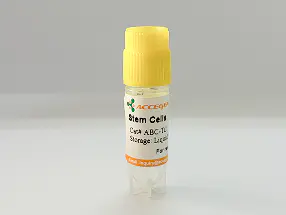
For research use only
| Cat No. | ABC-SC0069 |
| Product Type | Human Adult Stem Cells |
| Cell Type | Stem Cell |
| Species | Human |
| Growth Conditions | 37 ℃, 5% CO2 |
| Source Organ | Ventricle Derived |
| Disease | Normal |
| Storage | Liquid Nitrogen |
Human Neuronal Stem Cell (Ventricle Derived); Frozen Vial and Plated cells are available.
HighQC™ Human Neuronal Stem Cells (NSCs) (Ventricle Derived) are isolated from the ventricular zone—an embryonic neural stem cell niche lining the lateral ventricles—characterized by self-renewal and multipotency. These adherent cells typically form neurospheres or differentiate into bipolar/multipolar monolayers under defined culture conditions. They co-express canonical NSC markers such as Nestin, Sox2, and Musashi-1, consistent with neural progenitor identity in the ventricular zone. These human brain ventricular NSCs also maintain telomerase activity and low passage characteristics, enabling sustained in vitro proliferation while preserving differentiation potential. Their stable phenotype and robust neurogenic potential make them a reliable model for human central nervous system (CNS) development and regenerative neurobiology. Each lot undergoes rigorous screening and isolation procedures, and is rigorously tested to ensure it is free of contamination from HIV-1, HBV, HCV, syphilis, mycoplasma, fungi, yeast, and bacteria.
| Product Code | HighQC™ Human Neuronal Stem Cell (Ventricle Derived), Human Ventricular NSC, hV-NSC, Human Neural Stem Cells |
| Species | Human |
| Cat.No | ABC-SC0069 |
| Product Category | Stem Cells |
| Size/Quantity | 1 vial |
| Cell Type | Stem Cell |
| Growth Mode | Adherent |
| Shipping Info | Dry Ice |
| Growth Conditions | 37 ℃, 5% CO2 |
| Source Organ | Ventricle Derived |
| Disease | Normal |
| Biosafety Level | 1 |
| Storage | Liquid Nitrogen |
| Product Type | Human Adult Stem Cells |
HighQC™ Ventricle-Derived NSCs support studies in cortical neurogenesis, neuronal and glial lineage commitment, and molecular pathways driving embryonic brain development. These cells are ideal for modeling neurodevelopmental disorders, investigating neurodegenerative disease mechanisms, conducting neurotoxicity assessments, and constructing 3D neural organoids for drug screening and regenerative neuroscience research. Their adaptability also supports studies on brain injury repair, drug response profiling, and cell-based neural regeneration strategies.
When you publish your research, please cite our product as "AcceGen Biotech Cat.# XXX-0000". In return, we’ll give you a $200 coupon. Simply click here and submit your paper’s PubMed ID (PMID).