



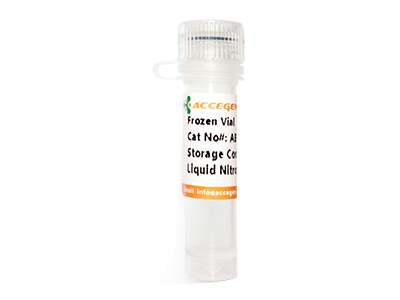
For research use only
| Cat No. | ABC-SC0127T |
| Product Type | Human Mesenchymal Stem Cells |
| Cell Type | Stem Cell |
| Species | Human |
| Growth Conditions | 37 ℃, 5% CO2 |
| Disease | Normal |
| Storage | Liquid Nitrogen |
Apply HighQC™ Human Wharton’s Jelly Mesenchymal Stem Cells from AcceGen, a multipotent stem cell model supporting differentiation and regenerative studies.
Human Whartons Jelly Mesenchymal Stem Cells provide an ideal culture model for the study of multipotent stem cell biology and differentiation processes. HMSC-WJ are isolated from Wharton’s Jelly of human umbilical cord and cryopreserved to ensure optimal phenotype and the highest viability and plating efficiency. HMSC-WJ can be expanded in an undifferentiated state for future differentiation to multiple lineages. Human Mesenchymal Stem Cells may be differentiated down the typical mesenchymal lineages, such as adipogenic, chondrogenic, and osteogenic. Human Whartons Jelly Mesenchymal Stem Cells are characterized by flow cytometry to ensure the proper expression of multiple markers of mesenchymal stem cells. They are uniformly positive for CD29, CD44, CD73, CD90, CD105, and CD166. They are uniformly negative for CD14, CD31, CD34, and CD45. AcceGen has developed optimized media to expand the Human Mesenchymal Stem Cell products in the undifferentiated state, as well as optimized media kits for inducing Adipogenesis, Chondrogenesis, and Osteogenesis. Additionally, provides convenient staining kits for staining the fully differentiated cells.
| Species | Human |
| Cat.No | ABC-SC0127T |
| Product Category | Stem Cells |
| Size/Quantity | 1 vial |
| Cell Type | Stem Cell |
| Growth Mode | Adherent |
| Shipping Info | Dry Ice |
| Growth Conditions | 37 ℃, 5% CO2 |
| Disease | Normal |
| Storage | Liquid Nitrogen |
| Product Type | Human Mesenchymal Stem Cells |
For research use only
When you publish your research, please cite our product as "AcceGen Biotech Cat.# XXX-0000". In return, we’ll give you a $100 coupon. Simply click here and submit your paper’s PubMed ID (PMID).