



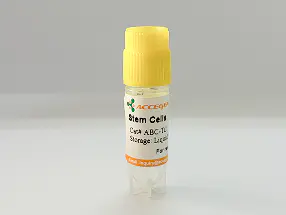
For research use only
| Cat No. | ABC-SC0016 |
| Product Type | Animal Adult Stem Cells |
| Cell Type | Stem Cell |
| Species | Rat |
| Growth Conditions | 37 ℃, 5% CO2 |
| Source Organ | Hypogastric Plexus |
| Disease | Normal |
| Storage | Liquid Nitrogen |
Rat Hypogastric Plexus Neuronal Stem Cells; Frozen Vial and Plated cells are available.
HighQC™ Rat Hypogastric Plexus Neuronal Stem Cells are isolated from the hypogastric plexus of healthy postnatal rats, a key autonomic ganglionic structure innervating pelvic organs. These cells originate from neural crest–derived progenitors and exhibit small, bipolar or multipolar morphology under adherent culture conditions. They express stem/progenitor markers such as Nestin, and Sox10, and can differentiate into sympathetic-like neurons and peripheral glia in vitro. These neuronal stem cells serve as a valuable model for exploring sympathetic nervous system development, pelvic neuropathies, and peripheral autonomic regeneration. These neuronal stem cells demonstrate self-renewal capacity and are responsive to neurotrophic signals such as BDNF and GDNF, enabling their use in modeling sympathetic nervous system development, pelvic neuropathies, and peripheral autonomic regeneration. Each lot undergoes rigorous screening and isolation procedures, and is rigorously tested to ensure it is free of contamination from mycoplasma, fungi, yeast, and bacteria.
| Product Code | HighQC™ Rat Hypogastric Plexus Neuronal Stem Cell, Rat HP Neuronal Stem Cells, Rat Pelvic Plexus NSCs |
| Species | Rat |
| Cat.No | ABC-SC0016 |
| Product Category | Stem Cells |
| Size/Quantity | 1 vial |
| Cell Type | Stem Cell |
| Growth Mode | Adherent |
| Shipping Info | Dry Ice |
| Growth Conditions | 37 ℃, 5% CO2 |
| Source Organ | Hypogastric Plexus |
| Disease | Normal |
| Biosafety Level | 1 |
| Storage | Liquid Nitrogen |
| Product Type | Animal Adult Stem Cells |
HighQC™ Rat Hypogastric Plexus Neuronal Stem Cells support research into pelvic autonomic nervous system development, sympathetic nerve plasticity, and peripheral nerve injury repair. They are suitable for modeling neurogenic bladder dysfunction, autonomic neuropathies, and evaluating neuromodulatory drugs. Their multipotent capacity enables differentiation into neuron and glial lineages relevant to pelvic nerve circuits and visceral innervation.
When you publish your research, please cite our product as "AcceGen Biotech Cat.# XXX-0000". In return, we’ll give you a $200 coupon. Simply click here and submit your paper’s PubMed ID (PMID).