




For research use only
| Cat No. | ABC-TC3524 |
| Product Type | Nervous Cells |
| Cell Type | Endothelial |
| Species | Human |
| Growth Conditions | 37 ℃, 5% CO2 |
| Source Organ | Brain |
| Disease | Normal |
| Storage | Liquid Nitrogen |
Utilize Human Brain Microvascular Endothelial Cells to model BBB permeability, neurovascular signaling, and CNS-targeted drug delivery mechanisms.
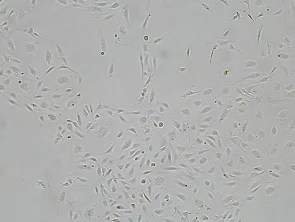
Human Brain Microvascular Endothelial Cells (HBMECs) are isolated from the human brain tissues. Brain Microvascular Endothelial Cells (BMECs) form the interface between circulating blood and neural tissue, maintaining the blood-brain barrier (BBB) and regulating the CNS (central nervous system) homeostasis. Endothelial cells (ECs) are flat with a central, elongated nucleus at the microscopic level. Studies have found that compounds such as glucose, amino acids and exogenous drugs can enter brain tissue through special transport proteins expressed in BMECs, including transferrin receptor, insulin-like growth factor receptor, and angiotensin receptor. These cells also express tight junction proteins like claudin-5, occludin, and ZO-1 that form the structural basis of the BBB’s selective permeability. Brain microvascular endothelial cells play a critical role in the protection and maintenance of the brain, where endothelial cells in the brain are integral to forming the selective permeability of the blood-brain barrier.
| Product Code | Human Brain Microvascular Endothelial Cells, HBMECs, Cerebral Microvascular Endothelial Cells, Brain MVECs Human, Human BBB Endothelial Cells |
| Species | Human |
| Cat.No | ABC-TC3524 |
| Product Category | Primary Cells |
| Size/Quantity | 1 vial |
| Cell Type | Endothelial |
| Growth Mode | Adherent |
| Shipping Info | Dry Ice |
| Growth Conditions | 37 ℃, 5% CO2 |
| Source Organ | Brain |
| Disease | Normal |
| Biosafety Level | 1 |
| Storage | Liquid Nitrogen |
| Product Type | Nervous Cells |
| Key Features | -Backed by AcceGen advanced technology |
| Quality Control | All cells test negative for mycoplasma, bacteria, yeast, and fungi. |
Human Brain Microvascular Endothelial Cells (HBMECs) can be used to study the mechanism of pathogens (such as bacteria and viruses) penetrating the BBB and to evaluate the delivery efficiency of drugs to the central nervous system. In the study of neurodegenerative diseases such as Alzheimer’s disease and Parkinson’s disease, HBMECs are used to analyze the association between vascular dysfunction and pathological development.
When you publish your research, please cite our product as “AcceGen Biotech Cat.# XXX-0000”. In return, we’ll give you a $200 coupon. Simply click here and submit your paper’s PubMed ID (PMID).
Lu X, Tang L, Wu Y, et al. Metabolically aberrant extracellular mitochondria induce oxidative endotheliopathy in traumatic brain injury. Blood Advances. 2025;9(9):2079-2090. doi:10.1182/bloodadvances.2024015296
These cells are commonly used in studies of the blood-brain barrier, neuroinflammation, and drug transport across the brain endothelium.
These cells should be cultured in a specialized endothelial growth medium, under standard cell culture conditions (37°C, 5% CO2).
Functional assays for Human Brain Microvascular Endothelial Cells include permeability assays, transendothelial electrical resistance (TEER) measurements, and migration assays. These assays are used to study the barrier properties and dynamics of these cells.