



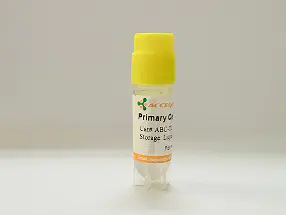
For research use only
| Cat No. | ABC-H0060X |
| Product Type | Male Reproductive Cells |
| Cell Type | Leydig Cell |
| Species | Human |
| Growth Conditions | 37 ℃, 5% CO2 |
| Disease | Normal |
| Storage | Liquid Nitrogen |
Human Leydig Cells support steroidogenesis studies for testosterone biosynthesis, receptor signaling, and endocrine function analysis in vitro models.
Human Leydig Cells (HLCs) are primary interstitial cells isolated from adult human testicular tissue and cryopreserved after primary culture. Residing in the testicular interstitium near seminiferous tubules, they exhibit round to spindle-shaped morphology with abundant eosinophilic cytoplasm and central nuclei. HLCs express key steroidogenic markers such as StAR, 3β-HSD, CYP17A1, and LHCGR. They are the principal source of testosterone, synthesized in response to luteinizing hormone (LH), and are essential for spermatogenesis, hormonal balance, and male reproductive function. Dysfunction of Leydig cells is implicated in hypogonadism, infertility, testicular dysgenesis, and Leydig cell tumors. Due to their physiological relevance, HLCs serve as an in vitro model for studying steroidogenesis, endocrine disruption, and testicular pathology. Repeated freeze-thaw cycles should be avoided to preserve cell viability and function.
| Product Code | Human Leydig Cells, Testicular Leydig Cells, hLCs, Human Interstitial Cells of Testis, Leydig Interstitial Cells |
| Species | Human |
| Cat.No | ABC-H0060X |
| Product Category | Primary Cells |
| Size/Quantity | 1 vial |
| Cell Type | Leydig Cell |
| Growth Mode | Adherent |
| Shipping Info | Dry Ice |
| Growth Conditions | 37 ℃, 5% CO2 |
| Disease | Normal |
| Biosafety Level | 1 |
| Storage | Liquid Nitrogen |
| Product Type | Male Reproductive Cells |
| Quality Control | All cells test negative for mycoplasma, bacteria, yeast, and fungi. |
Human Leydig Cells offer a reliable in vitro model for investigating testosterone production, LH-mediated signaling, and testicular endocrine function. They are instrumental in evaluating endocrine disruptors, steroidogenic drug responses, and mechanisms underlying androgen decline. These cells also support research in testicular tissue engineering, stem cell differentiation, and fertility restoration, making them valuable for both toxicological screening and regenerative medicine.
When you publish your research, please cite our product as “AcceGen Biotech Cat.# XXX-0000”. In return, we’ll give you a $200 coupon. Simply click here and submit your paper’s PubMed ID (PMID).
Leydig cells are specialized endocrine cells located in the interstitial tissue of the testes. They are responsible for the production and secretion of testosterone, which is essential for male reproductive function and secondary sexual characteristic development.