



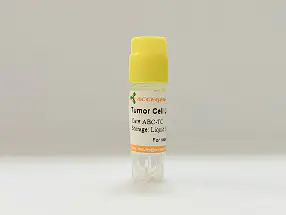
For research use only
| Cat No. | ABC-TC0450 |
| Product Type | Human Nerve Tumors Cell Lines |
| Species | Human |
| Growth Conditions | 37 ℃, 5% CO2 |
| Product Code | IMR5, IMR 5, imr-5 |
Species: human, Caucasian; Tumor: neuroblastoma
IMR-5 is a human neuroblastoma tumor cell line originally established from a metastatic abdominal tumor of a 1-year-old male patient with neuroblastoma, a childhood malignancy of the sympathetic nervous system. It exhibits neuroblast-like morphology and grows as adherent monolayers in culture. It is classified as microsatellite stable (MSS) and shows genomic features typical of high-risk neuroblastoma. IMR-5 cell line expresses high levels of transcripts involved in protein synthesis and oncogenic pathways that contribute to tumor behavior. As a malignant tumor model, IMR-5 supports investigations into neural tumor biology and oncogenic signaling mechanisms. The cells undergo rigorous screening and isolation procedures, and are rigorously tested to ensure they are free of contamination from HIV-1, HBV, HCV, Syphilis, Mycoplasma, Fungi, Yeast, and Bacteria.
| Product Code | IMR5, IMR 5, imr-5 |
| Species | Human |
| Cat.No | ABC-TC0450 |
| Product Category | Tumor Cell Lines |
| Size/Quantity | 1 vial |
| Shipping Info | Dry Ice |
| Growth Conditions | 37 ℃, 5% CO2 |
| Biosafety Level | 1 |
| Storage | Liquid Nitrogen |
| Product Type | Human Nerve Tumors Cell Lines |
IMR-5 cells are used as an in vitro model of human neuroblastoma to study tumor cell proliferation, oncogenic signaling pathways, and drug response mechanisms. They support research into pharmacogenomic profiling, neuroblastoma-associated gene expression networks, and evaluation of therapeutic agents relevant to pediatric neural cancer biology.
When you publish your research, please cite our product as “AcceGen Biotech Cat.# XXX-0000”. In return, we’ll give you a $200 coupon. Simply click here and submit your paper’s PubMed ID (PMID).
Feng Y, Lee J, Yang L, et al. Engineering CD276/B7-H3-targeted antibody-drug conjugates with enhanced cancer-eradicating capability. Cell Reports. 2023;42(12):113503. doi:10.1016/j.celrep.2023.113503