



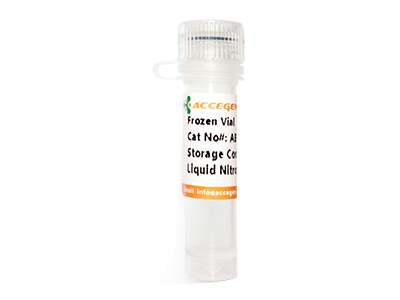
For research use only
| Cat No. | ABC-TC0514 |
| Product Type | Human Lymphoma Cell Lines |
| Species | Human |
| Growth Conditions | 37 ℃, 5% CO2 |
| Disease | Lymphoma |
| Product Code | KM H-2; KMH2 |
Investigate KM-H2. Established from pleural effusion of a 37-year-old man with Hodgkin lymphoma, mixed cellularity, Stage IV at relapse, 1974.
KM-H2 is a human Hodgkin’s lymphoma cell line established in 1974 from the pleural effusion of a 37-year-old male patient with mixed cellularity Hodgkin lymphoma progressing to lymphocyte depletion (stage IV at relapse). These cells grow in suspension culture, displaying predominantly round, multinucleated morphology characteristic of Hodgkin and Reed-Sternberg (HRS) cells. KM-H2 expresses classical HRS markers, including CD15 and CD30, along with B-cell lineage marker PAX5, typically at low levels. They exhibit constitutive activation of the NF-κB signaling pathway, which is essential for their survival and proliferation. Enzymatic activities such as acid phosphatase and nonspecific esterase are also present. KM-H2 cells serve as a valuable model for studying Hodgkin lymphoma pathogenesis, immune evasion mechanisms, and therapeutic interventions.
| Product Code | KM H-2; KMH2 |
| Species | Human |
| Cat.No | ABC-TC0514 |
| Product Category | Tumor Cell Lines |
| Size/Quantity | 1 vial |
| Shipping Info | Dry Ice |
| Growth Conditions | 37 ℃, 5% CO2 |
| Disease | Lymphoma |
| Biosafety Level | 1 |
| Storage | Liquid Nitrogen |
| Product Type | Human Lymphoma Cell Lines |
The KM-H2 cell line plays a key role in the study of human Hodgkin’s lymphoma. It helps researchers identify factors that promote the growth and survival of lymphoma cells and is also instrumental in exploring mechanisms of radioresistance. These applications support the development of more effective treatment strategies for this challenging disease.
When you publish your research, please cite our product as “AcceGen Biotech Cat.# XXX-0000”. In return, we’ll give you a $200 coupon. Simply click here and submit your paper’s PubMed ID (PMID).