



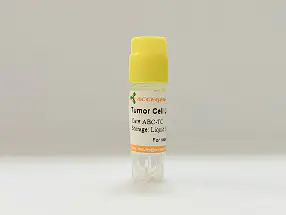
For research use only
| Cat No. | ABC-TC0557 |
| Product Type | Human Esophageal Cancer Cell Lines |
| Cell Type | Epithelial-like |
| Species | Human |
| Growth Conditions | 37 ℃, 5% CO2 |
| Disease | Esophageal Squamous Cell Cancer |
| Product Code | KYSE 150; KYSE-150; Kyse150; KY150 |
Esophageal cancer, poorly differentiated squamous carcinoma
KYSE150 is a human esophageal squamous cell carcinoma (ESCC) cell line established from a poorly differentiated tumor resected from the upper cervical esophagus of a 49-year-old Japanese woman following radiotherapy. These epithelial-like cells grow as an adherent monolayer. Key KYSE150 characteristics include a human hypertriploid/mixed-ploid profile (~70 chromosomes modal number), with chromosomal amplifications including oncogenes c-erbB (8×) and cyclin D1 (4×), along with frequent methylation of p16 (INK4a) gene and intact p15. KYSE150 is tumorigenic in nude mice, capable of forming tumors and metastases in vivo, and serves as a model for both tumor growth and metastatic mechanisms. The cells undergo rigorous screening and isolation procedures, and are rigorously tested to ensure they are free of contamination from HIV-1, HBV, HCV, Syphilis, Mycoplasma, Fungi, Yeast, and Bacteria.
| Product Code | KYSE 150; KYSE-150; Kyse150; KY150 |
| Species | Human |
| Cat.No | ABC-TC0557 |
| Product Category | Tumor Cell Lines |
| Size/Quantity | 1 vial |
| Cell Type | Epithelial-like |
| Growth Mode | Adherent |
| Shipping Info | Dry Ice |
| Growth Conditions | 37 ℃, 5% CO2 |
| Disease | Esophageal Squamous Cell Cancer |
| Biosafety Level | 1 |
| Storage | Liquid Nitrogen |
| Product Type | Human Esophageal Cancer Cell Lines |
| Stock | Out of stock |
KYSE150 cells offer a robust in vitro and in vivo platform to study the molecular pathogenesis of ESCC, therapeutic responses, and resistance mechanisms. They have been widely used in exploring tumor-microenvironment crosstalk, including VEGF-C driven lymphangiogenesis in co-culture with M2 macrophages. Radioresistant sublines (KYSE150/RR) have further facilitated dissection of epithelial-mesenchymal transition (EMT), PTEN/Akt-signaling, and radiotherapy response dynamics. KYSE150 is ideal for investigating tumor proliferation, metastasis, radiotherapy resistance, molecular signaling networks, and anticancer drug efficacy.
When you publish your research, please cite our product as “AcceGen Biotech Cat.# XXX-0000”. In return, we’ll give you a $200 coupon. Simply click here and submit your paper’s PubMed ID (PMID).