



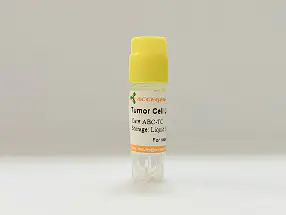
For research use only
| Cat No. | ABC-TC0565 |
| Product Type | Mouse Leukemia Cell Lines |
| Cell Type | Lymphoblast |
| Species | Mouse |
| Growth Conditions | 37 ℃, 5% CO2 |
| Source Organ | Skin |
| Disease | Leukemia |
| Product Code | L 1210; L-1210; Leukemic 1210; Leukemia 1210; Leukemia L1210 |
Mouse DBA/2 lymphocytic leukaemia. Established from a tumour induced in an 8 month old female 234 subline 212 of a DBA mouse.
The L1210 cell line is a murine lymphocytic leukemia model originally established in 1954 from the ascitic fluid of an 8-month-old female DBA/2 mouse following exposure to a chemical carcinogen. These rapidly proliferating suspension cells have been widely employed in leukemia research, particularly in the evaluation of chemotherapeutic agents and mechanisms of drug resistance. These cells exhibit lymphoblast morphology with a diploid stemline number of 40 chromosomes (range from 32 to 80). L1210 cells exhibit high sensitivity to antimetabolites such as amethopterin (methotrexate) and 6-mercaptopurine. Resistance mechanisms in this line have been linked to dihydrofolate reductase (DHFR) gene amplification and altered expression of multidrug resistance-associated proteins, including P-glycoprotein (MDR1). The cells undergo rigorous screening and isolation procedures, and are rigorously tested to ensure they are free of contamination from mycoplasma, fungi, yeast, and bacteria.
| Product Code | L 1210; L-1210; Leukemic 1210; Leukemia 1210; Leukemia L1210 |
| Species | Mouse |
| Cat.No | ABC-TC0565 |
| Product Category | Tumor Cell Lines |
| Size/Quantity | 1 vial |
| Cell Type | Lymphoblast |
| Growth Mode | Suspension |
| Shipping Info | Dry Ice |
| Growth Conditions | 37 ℃, 5% CO2 |
| Source Organ | Skin |
| Disease | Leukemia |
| Biosafety Level | 1 |
| Storage | Liquid Nitrogen |
| Product Type | Mouse Leukemia Cell Lines |
L1210 lymphocytic leukemia lines are widely employed in leukemia research for preclinical evaluation of chemotherapeutic efficacy, especially in screening antimetabolites, antifolates, and topoisomerase inhibitors. They are also pivotal in mechanistic studies of drug resistance. Their rapid proliferation and reproducible tumorigenicity in mouse models make them ideal for in vivo efficacy testing and pharmacodynamic studies. Additionally, L1210 serves as a platform for evaluating novel immunotherapeutic and sonodynamic treatments in leukemia.
When you publish your research, please cite our product as “AcceGen Biotech Cat.# XXX-0000”. In return, we’ll give you a $200 coupon. Simply click here and submit your paper’s PubMed ID (PMID).