



For research use only
| Cat No. | ABC-RC035Z |
| Product Type | Reporter Stable Cell Line |
| Cell Type | Epithelial-like |
| Species | Human |
| Source Organ | Prostate |
| Disease | Carcinoma |
| Storage | Liquid Nitrogen |
Utilize LNCaP Clone FGC EGFP Reporter Cell Line to monitor gene expression, prostate cancer biology, and fluorescence-based assay development in vitro.
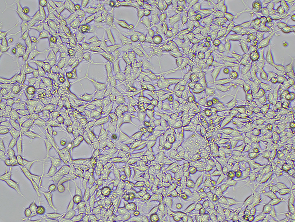
The LNCaP Clone FGC EGFP cell line was developed from LNCaP Clone FGC cells and carries the EGFP gene. These cells stably express EGFP.
| Species | Human |
| Cat.No | ABC-RC035Z |
| Product Category | Transfected Stable Cell Lines |
| Size/Quantity | 1 vial |
| Cell Type | Epithelial-like |
| Growth Mode | Adherent |
| Shipping Info | Dry Ice |
| Growth Conditions | 37 ℃, 5% CO2 |
| Source Organ | Prostate |
| Disease | Carcinoma |
| Biosafety Level | 1 |
| Storage | Liquid Nitrogen |
| Product Type | Reporter Stable Cell Line |
| Stock | Custom |
| Quality Control | All cells test negative for mycoplasma, bacteria, yeast, and fungi. |
When you publish your research, please cite our product as “AcceGen Biotech Cat.# XXX-0000”. In return, we’ll give you a $200 coupon. Simply click here and submit your paper’s PubMed ID (PMID).
LNCaP cells have relatively weak adhesion and may remain partially suspended after thawing, particularly when the culture medium does not contain all recommended supplements. If LNCaP cells are not adherent after thaw, prepare the complete medium according to the datasheet, including NEAA and sodium pyruvate, and replace the current medium with the recommended formulation. Puro should be withheld until the cells have recovered and show good growth. Continue culturing for 2–3 days with minimal disturbance and monitor cell attachment and morphology. If poor attachment persists, provide 10× and 20× cell images for further assessment.