



• Happy Holidays from AcceGen! Orders placed during Dec 22–Jan 2 will be processed and shipped after operations resume. Please plan ahead.

Tumor Cell Lines

TE-671

  • For research use only

Cat No.

ABC-TC612S

Product Type

Human Sarcoma Cell Lines

Cell Type

Epithelial

Species

Human

Growth Conditions

37 ℃, 5% CO2

TE-671 is a rhabdomyosarcoma line expressing MyoD, NSE, and nAChR, useful for studying ARMS pathology and neuromuscular tumor characteristics.

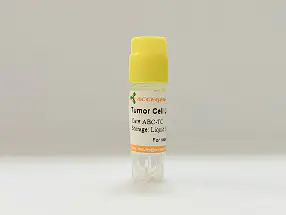
Product Image

Description

TE-671 is a human rhabdomyosarcoma (RMS) cell line originally derived from a biopsy of a chest wall tumor in a 6-year-old female patient. Although initially classified as a medulloblastoma, further analysis confirmed its origin as alveolar-type rhabdomyosarcoma, a rare and aggressive soft tissue sarcoma. TE-671 cells exhibit a polygonal to spindle-shaped morphology and grow adherently in culture. Cytogenetically, these cells carry complex karyotypic abnormalities, including translocations affecting PAX3 and FOXO1 genes, which are common oncogenic drivers in alveolar rhabdomyosarcoma. TE-671 expresses muscle differentiation markers such as desmin, myogenin, and MyoD1, as well as nicotinic acetylcholine receptors (nAChRs), making them suitable for neuropharmacological studies. TE-671 are often distinguished from the similarly referenced RD cell line in comparative rhabdomyosarcoma research due to differences in fusion status and molecular phenotype.

Species

Human

Cat.No

ABC-TC612S

Product Category

Tumor Cell Lines

Size/Quantity

1 vial

Cell Type

Epithelial

Shipping Info

Dry Ice

Growth Conditions

37 ℃, 5% CO2

Biosafety Level

1

Storage

Liquid Nitrogen

Product Type

Human Sarcoma Cell Lines

Application

  • TE-671 cells are widely used in rhabdomyosarcoma biology, myogenic differentiation studies, and neuromuscular pharmacology due to their expression of nAChRs. They are also employed in preclinical drug screening, muscle tumor modeling, and evaluation of sarcoma-specific gene fusions. TE-671 cells exhibit voltage-gated sodium currents and show expression of the NaV1. 7 channel, making them a useful in vitro model for studying voltage-gated sodium channels (VGSCs), particularly in the context of pain-related research.

Citation

When you publish your research, please cite our product as “AcceGen Biotech Cat.# XXX-0000”. In return, we’ll give you a $100 coupon. Simply click here and submit your paper’s PubMed ID (PMID).

Inquiring TE-671

We know how valuable your research is to you, but are you wondering what you can expect to pay for quick accurate results every time? Fill out a request in the form below and we’ll get back to you within 24 hours with a quote.
High Viability
To succeed in cell culture
Precision and Reliability
To support a consistent result
Customization Options
Tailed to your research

Tags

AcceGen Scroll Top Button