



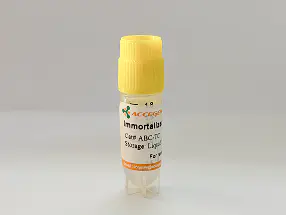
For research use only
| Cat No. | ABI-TC4171 |
| Product Type | Immortalized Cell Line |
| Cell Type | Microglia |
| Species | Human |
| Growth Conditions | 37 ℃, 5% CO2 |
| Source Organ | Brain |
| Disease | Normal |
| Storage | Liquid Nitrogen |
Immortalized SV40 Microglia express CD68/Iba1, release cytokines upon stimulation, and are ideal for neuroinflammation and CNS-targeted drug screening.
Immortalized Human Microglia are derived from purified human microglial cells isolated from normal adult brain tissue and immortalized with SV40 large T antigen lentiviral transduction. This allows for continuous proliferation and extended lifespan. For optimal performance, these cells are cryopreserved at early passages. Under resting conditions, they exhibit typical ramified microglial morphology and retain key markers like Iba1 and CD68, confirmed by flow cytometry and immunocytochemistry. Functionally, these cells participate in brain surveillance, immune responses, synaptic pruning, and tissue repair. Upon exposure to LPS or β-amyloid, they become activated, secreting cytokines (e.g., IL-1β, TNF-α) and nitric oxide, and undergo morphological changes. They are ideal for studying human microglial cell line behavior, microglial cells activity, and mechanisms related to microglia function in neuroinflammation, neurodegenerative diseases, and drug discovery.
| Product Code | Immortalized Human Microglia, Human Immortalized Microglial Cells, hMicroglia Cell Line |
| Species | Human |
| Cat.No | ABI-TC4171 |
| Product Category | Immortalized Cell Lines |
| Size/Quantity | 1 vial |
| Cell Type | Microglia |
| Growth Mode | Adherent |
| Shipping Info | Dry Ice |
| Growth Conditions | 37 ℃, 5% CO2 |
| Source Organ | Brain |
| Disease | Normal |
| Biosafety Level | 1 |
| Storage | Liquid Nitrogen |
| Product Type | Immortalized Cell Line |
| Immortalization Method | Lenti‐SV40 Lentivirus |
| Key Features | – Backed by AcceGen advanced technology – Cryopreserved for highest viability and plating efficiency – Quality-guaranteed for accurate results – Timely technical support for best experimental outcomes |
| Quality Control | All cell lots test negative for HIV-1, HBV, HCV, mycoplasma, yeast, fungi, and other pathogens. |
Microglia research has long been constrained by the availability of primary human sources. Immortalized Human Microglia (SV40 cell line) offers a consistent and accessible model that allows the establishment of in vitro models for studying the physiological and pathological properties of microglia cells. They can also be used to study neuron-microglia interactions and mechanisms underlying neurodegenerative and neuroinflammatory conditions
When you publish your research, please cite our product as “AcceGen Biotech Cat.# XXX-0000”. In return, we’ll give you a $200 coupon. Simply click here and submit your paper’s PubMed ID (PMID).
Imm JL. Methylomic variation induced by LPS exposure in a microglial cell line. Alzheimer’s & Dementia. 2020;16(S2). doi:https://doi.org/10.1002/alz.042571
Imm J. Exploring the Epigenome of Neurons and Glia in Vitro to Determine their Utility as a Model for Alzheimer’s Disease. June 2020. https://hdl.handle.net/10871/121512. Accessed September 8, 2025.
Munawara U, Catanzaro M, Xu W, et al. Hyperactivation of monocytes and macrophages in MCI patients contributes to the progression of Alzheimer’s disease. Immun Ageing. 2021;18(1):29. Published 2021 Jun 21. doi:10.1186/s12979-021-00236-x
This cell line can be passed for at least 10 generations. Under under AcceGen’s recommended culture conditions, it can be subcultured up to around 30 generations.
The Immortalized Human Microglia generated by SV40 lentiviral transduction use puromycin (puro) as the selection marker.
Yes, these are distinct cell lines. HMC3 was originally derived from fetal brain tissue provided by the NIH. It has high consistency but relatively limited functionality, primarily suitable for basic research and does not fully replicate primary human microglia. In contrast, ABI-TC4171 IMMORTALIZED HUMAN MICROGLIA are derived from selected fetal or adult brain tissue, expanded from primary microglia, and designed to retain functional characteristics closer to primary cells. They are more suitable for studies of inflammation, neurotoxicity, and viral infection.
Microglia are the resident immune cells of the central nervous system, and are widely used as in vitro models for studying neuroinflammatory mechanisms.They perform immune surveillance, phagocytosis of debris and pathogens, and regulation of neuroinflammatory responses, contributing to CNS homeostasis and disease mechanisms.
These cells can typically be passaged up to ~30 times under recommended culture conditions. However, to minimize potential phenotypic drift and ensure experimental consistency, we recommend using the cells within 20–25 passages.
After thawing, the medium should be changed the next day to remove residual DMSO and non-viable cells.
During routine culture, the medium can be changed every 3 days until the cells reach ~70% confluence.
Once the culture reaches ~70% confluence, it is recommended to change the medium every other day until ~90% confluence, followed by passaging.
With proper scheduling, it is usually possible to avoid medium changes over the weekend, provided the culture density and feeding schedule are planned accordingly.
The cells are cultured using our Microglia Medium Kit, which contains all required supplements.
The prepared complete medium has a shelf life of approximately one month when stored properly according to the recommended conditions.
The doubling time of these cells is approximately 48–72 hours.
For short-term assays (e.g., signaling activation, phosphorylation, transcriptional responses, cytokine secretion within 6–24 hours), it is generally acceptable to follow assay timelines such as 6, 24, or 36 hours. However, it is important to ensure that:
Seeding density is consistent across all wells
Cells are at similar passage numbers
Cultures are in the logarithmic growth phase
Confluence is uniform across conditions
These factors help minimize variability unrelated to the experimental treatment.
For experiments focused on cell proliferation, cell number, metabolism, or long-term toxicity (>48 hours), the 48–72 hour doubling time should be incorporated into the experimental design, with time points such as 48 or 72 hours recommended.
The recommended culture condition is medium supplemented with 5% FBS, which supports optimal growth and maintenance of microglial characteristics.
If serum interference is a concern for specific assays, we recommend a two-step approach:
Maintain cells in the recommended 5% FBS complete medium until they reach a stable and uniform condition (consistent passage and density).
Reduce serum or switch to serum-free/defined medium shortly before the experiment (e.g., 2–24 hours prior to treatment) to minimize serum-related assay interference.
This strategy helps maintain cell health while improving assay sensitivity.