



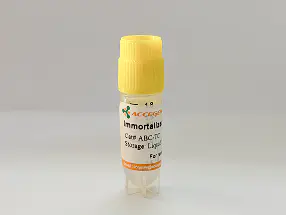
For research use only
| Cat No. | ABI-TC125R |
| Product Type | Immortalized Cell Line |
| Cell Type | Muscle Cells |
| Species | Human |
| Growth Conditions | 37 °C, 5% CO2 |
| Source Organ | Penile |
| Disease | Normal |
| Storage | Liquid Nitrogen |
Immortalized Human Corpus Cavernosum Smooth Muscle Cells carrying the SV40T gene via lentiviral transduction, 0.5 million cells per vial for research use.
Immortalized Human Corpus Cavernosum Smooth Muscle Cells (HCCSMCs) are derived from human corpus cavernosum tissue and genetically modified to enable long-term proliferation while maintaining key smooth muscle cell characteristics. These cells exhibit a typical spindle-shaped morphology and grow adherently under standard culture conditions. They express smooth muscle markers such as α-smooth muscle actin (α-SMA) and retain functional properties including contractility and responsiveness to vasoactive stimuli. Compared with primary cells, immortalized HCCSMCs provide enhanced stability, reproducibility, and extended lifespan, making them a reliable in vitro model for studies of erectile function, vascular smooth muscle biology, drug screening, and related signaling pathways.
| Product Code | Immortalized Human Corpus Cavernosum Smooth Muscle Cells,Immortalized HCCSMCs,IHCSMC |
| Species | Human |
| Cat.No | ABI-TC125R |
| Product Category | Immortalized Cell Lines |
| Size/Quantity | 1 vial |
| Cell Type | Muscle Cells |
| Growth Mode | Adherent |
| Shipping Info | Dry Ice |
| Growth Conditions | 37 °C, 5% CO2 |
| Source Organ | Penile |
| Disease | Normal |
| Biosafety Level | 1 |
| Storage | Liquid Nitrogen |
| Product Type | Immortalized Cell Line |
| Immortalization Method | SV40T |
| Quality Control | All cells test negative for mycoplasma, bacteria, yeast, and fungi. |
Immortalized Human Corpus Cavernosum Smooth Muscle Cells are widely used in erectile dysfunction research, smooth muscle physiology, and vascular signaling studies. They respond to vasoactive stimuli such as nitric oxide and calcium signaling, supporting contractility and relaxation assays. Their stable proliferation, consistent phenotype, and preserved functional properties make them a reliable in vitro model for pharmacological evaluation and mechanistic studies of corpus cavernosum smooth muscle.