


For research use only
| Cat No. | ABC-RC221H |
| Product Type | Reporter Stable Cell Line |
| Cell Type | Neuron |
| Species | Human |
| Host Cell | U251 Cell Line |
| Source Organ | Brain |
| Disease | Glioblastoma |
| Storage | Liquid Nitrogen |
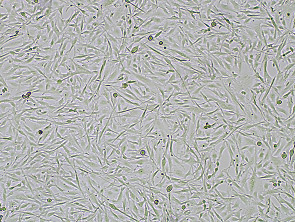
The U251 GFP cell line is transformed from U251 cell, expressing the GFP gene. The cell constitutively express GFP.
The U251 GFP Reporter Cell Line is a green fluorescent protein (GFP)-labeled derivative of the U251 human glioblastoma cell line, commonly used in research on glioblastoma biology, tumor cell invasion, and treatment response. GFP expression enables researchers to visualize and identify labeled cells using compatible fluorescence microscopy or imaging systems. Published studies have used GFP-expressing U251 cells to investigate glioblastoma cell behavior, including intracranial tumor growth and the distribution of invasive tumor cells in experimental models. These studies provide a scientific basis for using fluorescently labeled U251 cells in research, but do not establish the performance of every commercially available U251 GFP reporter product. The suitability of this cell line for specific imaging workflows, co-culture experiments, or in vivo studies should be confirmed under the intended experimental conditions. GFP fluorescence should also be interpreted in the context of reporter expression, cell condition, and imaging settings rather than treated as a direct measure of cell number or tumor volume.
| Product Code | U251 GFP Cell Line |
| Species | Human |
| Cat.No | ABC-RC221H |
| Product Category | Transfected Stable Cell Lines |
| Size/Quantity | 1 vial |
| Cell Type | Neuron |
| Growth Mode | Adherent |
| Shipping Info | Dry Ice |
| Growth Conditions | 37 ℃, 5% CO2 |
| Source Organ | Brain |
| Disease | Glioblastoma |
| Biosafety Level | 1 |
| Storage | Liquid Nitrogen |
| Product Type | Reporter Stable Cell Line |
| Host Cell | U251 Cell Line |
| Stock | Custom |
| Quality Control | All cells test negative for mycoplasma, bacteria, yeast, and fungi. |
The U251 GFP Reporter Cell Line may be useful for fluorescence-based studies of glioblastoma cell behavior, including cell migration, invasion, cell–cell interactions, and responses to experimental treatments. GFP labeling can help distinguish reporter-positive cells from nonfluorescent cells in co-culture systems and may facilitate their identification or isolation by fluorescence-activated cell sorting (FACS), provided that fluorescence intensity and sorting conditions are appropriately validated. GFP-labeled U251 cells have also been used in experimental intracranial glioblastoma models to investigate tumor cell distribution and invasion into surrounding brain tissue. Use of the AcceGen product in these applications should be assessed according to the experimental design and the product’s documented characteristics. Fluorescence intensity is affected by reporter expression, cell state, imaging settings, and tissue depth; it should not be treated as a direct quantitative substitute for viable cell number or tumor volume without independent validation.
The U251 cell line is widely used as an in vitro model for studying human glioblastoma, including tumor cell signaling, invasive behavior, and treatment response. GFP labeling adds a fluorescent readout that can support visualization and identification of cells in imaging and co-culture experiments. Published research using GFP-expressing U251 cells has investigated the invasive behavior of glioblastoma cells in the brain and changes associated with invasive tumor cell populations. GFP-labeled U251 cells have also been used to distinguish cell populations in bystander-effect experiments, illustrating their potential utility in mixed-cell systems. Research using U251 cells should account for reported genetic and phenotypic variation among long-term cultured subclones, which may influence experimental reproducibility. The suitability of this specific reporter cell line for a given application should therefore be established using appropriate controls and assay-specific validation.
Cell Recovery (Recover the U251 GFP reporter cells according to the supplier's recommended protocol.) → Cell Culture (Maintain cells under appropriate culture conditions and monitor morphology and growth.) → GFP Signal Assessment (Examine fluorescence using a compatible microscope or flow cytometer.) → Experimental Setup (Prepare validated cell cultures, co-culture systems, or other suitable experimental models.) → Fluorescence Monitoring (Observe GFP-positive cell localization and behavior under defined imaging conditions.) → Cell Identification or Isolation (Use fluorescence-based detection or FACS when required and validated.) → Data Analysis (Interpret fluorescence alongside appropriate controls and independent biological measurements.)
When you publish your research, please cite our product as “AcceGen Biotech Cat.# XXX-0000”. In return, we’ll give you a $200 coupon. Simply click here and submit your paper’s PubMed ID (PMID).