



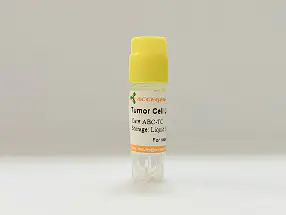
For research use only
| Cat No. | ABC-TC0010 |
| Product Type | Mouse Embryo Cell Lines |
| Cell Type | Fibroblast |
| Species | Mouse |
| Growth Conditions | 37 ℃, 5% CO2 |
| Source Organ | Embryo |
| Disease | Normal |
| Product Code | BALB/c 3T3 clone A31; Balb/c3T3; BALB/c 3T3; Balb/c 3T3; BALB/3T3; Balb/3T3-4-Cl31; BALB/3T3 cl. A31; BALB 3T3 clone A31; BALB/3T3 (clone A31); B/C3T3; 3T3-A31; 3T3(A31); A31; A31N |
Mouse BALB/c embryo. Cells have now lost their contact inhibition.
3T3 clone A31 is a spontaneously immortalized murine fibroblast cell line derived from BALB/c mouse embryo tissue through serial passage using the 3T3 protocol. This clone was selected from the parental BALB/c 3T3 population for its uniform morphology and reproducible growth kinetics. The cells exhibit elongated fibroblast-like morphology and grow as adherent monolayers with high proliferation rates. A hallmark of A31 cells is their loss of contact inhibition, allowing continued growth beyond confluence—a feature associated with early stages of transformation. The karyotype is pseudodiploid with moderate chromosomal instability, and the cells are non-tumorigenic under standard conditions. The cells undergo rigorous screening and isolation procedures, and are rigorously tested to ensure they are free of contamination from Mycoplasma, Fungi, Yeast, and Bacteria.
| Product Code | BALB/c 3T3 clone A31; Balb/c3T3; BALB/c 3T3; Balb/c 3T3; BALB/3T3; Balb/3T3-4-Cl31; BALB/3T3 cl. A31; BALB 3T3 clone A31; BALB/3T3 (clone A31); B/C3T3; 3T3-A31; 3T3(A31); A31; A31N |
| Species | Mouse |
| Cat.No | ABC-TC0010 |
| Product Category | Tumor Cell Lines |
| Size/Quantity | 1 vial |
| Cell Type | Fibroblast |
| Growth Mode | Adherent |
| Shipping Info | Dry Ice |
| Growth Conditions | 37 ℃, 5% CO2 |
| Source Organ | Embryo |
| Disease | Normal |
| Biosafety Level | 1 |
| Storage | Liquid Nitrogen |
| Product Type | Mouse Embryo Cell Lines |
3T3 clone A31 cells are a foundational model in cancer research, toxicology, and cellular transformation studies. Their susceptibility to chemical mutagens and oncogene transfection makes them widely used in focus formation assays, anchorage-independent growth evaluation, and Ras or Src pathway activation studies. Additionally, they are employed in screening tumor-promoting agents and evaluating carcinogenicity in vitro.
When you publish your research, please cite our product as “AcceGen Biotech Cat.# XXX-0000”. In return, we’ll give you a $200 coupon. Simply click here and submit your paper’s PubMed ID (PMID).