



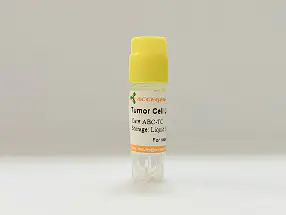
For research use only
| Cat No. | ABC-TC0022 |
| Product Type | Human Brain Cancer Cell Lines |
| Cell Type | Epithelial-like |
| Species | Human |
| Growth Conditions | 37 ℃, 5% CO2 |
| Source Organ | Brain |
| Disease | Glioblastoma |
| Product Code | A172; A 172; A-172 MG; A-172MG |
Organ: brain Disease: glioblastoma
A-172 cell line is a human glioblastoma cell line derived from a 53-year-old male patient, exhibiting epithelial-like morphology with adherent growth in standard culture. These cells maintain a polyploid karyotype and express mesenchymal markers such as CD90, CD105, FAP, and tenascin. Under exposure to quantum molecular resonance (QMR), A-172 cells undergo G2/M cell cycle arrest and significant decreases in proliferation and cell viability, highlighting susceptibility to non-chemical therapeutic interventions. Recent studies also demonstrate that A-172 exhibits metabolic reprogramming characteristic of glioblastoma, with increased glycolytic activity, glutamine metabolism, and lipid metabolic shifts. The cells undergo rigorous screening and isolation procedures, and are rigorously tested to ensure they are free of contamination from HIV-1, HBV, HCV, Syphilis, Mycoplasma, Fungi, Yeast, and Bacteria.
| Product Code | A172; A 172; A-172 MG; A-172MG |
| Species | Human |
| Cat.No | ABC-TC0022 |
| Product Category | Tumor Cell Lines |
| Size/Quantity | 1 vial |
| Cell Type | Epithelial-like |
| Growth Mode | Adherent |
| Shipping Info | Dry Ice |
| Growth Conditions | 37 ℃, 5% CO2 |
| Source Organ | Brain |
| Disease | Glioblastoma |
| Biosafety Level | 1 |
| Storage | Liquid Nitrogen |
| Product Type | Human Brain Cancer Cell Lines |
| Host Cell | 22Rv1 |
A-172 cells serve as a versatile model for glioblastoma research, especially in tumor metabolism, cell cycle control, and non-conventional therapies. They have been used to study QMR-induced cell cycle arrest and mitochondrial dysfunction, and to explore the impact of thymoquinone on proliferation, p53 signaling, and Wnt pathways. This line is also valuable for testing metabolic inhibitors affecting glycolysis, glutaminolysis, and lipid metabolism, as well as for evaluating photodynamic or targeted therapeutic strategies in glioblastoma.
When you publish your research, please cite our product as “AcceGen Biotech Cat.# XXX-0000”. In return, we’ll give you a $200 coupon. Simply click here and submit your paper’s PubMed ID (PMID).