



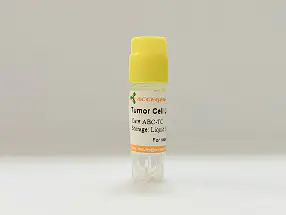
Tumor Cell Lines

A9

  • For research use only

Cat No.

ABC-TC0037

Product Type

Mouse Skin Cell Lines

Cell Type

Fibroblast

Species

Mouse

Growth Conditions

37 ℃, 5% CO2

Source Organ

Adipose

Disease

Normal

Product Code

A-9; AG 9

Explore A9 mouse cell line derived from L929 cells, partially resistant to azaguanine, ideal for genetic research and enzyme activity studies.

Product Image

Description

A9 is a murine fibroblast tumor cell line derived from areolar and adipose tissues of C3H/An mice and represents a subline of the L929 parental line. This chemical selection conferred partial resistance to 8-azaguanine and altered purine metabolism pathways. A9 cells retain fibroblast-like, elongated morphology and adhere tightly in monolayer culture. While not spontaneously tumorigenic, A9 is frequently used in tumorigenesis assays via transformation or fusion due to its high proliferative capacity and altered nucleotide metabolism. Cytogenetically, A9 exhibits stable murine karyotypes with structural rearrangements consistent with L929 derivation. The line is widely used in somatic cell genetics, gene transfer, and hybridoma construction. The cells undergo rigorous screening and isolation procedures, and are rigorously tested to ensure they are free of contamination from Mycoplasma, Fungi, Yeast, and Bacteria.

Product Code

A-9; AG 9

Species

Mouse

Cat.No

ABC-TC0037

Product Category

Tumor Cell Lines

Size/Quantity

1 vial

Cell Type

Fibroblast

Growth Mode

Adherent

Shipping Info

Dry Ice

Growth Conditions

37 ℃, 5% CO2

Source Organ

Adipose

Disease

Normal

Biosafety Level

1

Storage

Liquid Nitrogen

Product Type

Mouse Skin Cell Lines

Application

  • A9 cells are a key tool in somatic cell genetics and molecular biology, especially in gene transfer, cell fusion, and selection studies using azaguanine or HAT media. Their partial resistance to 8-azaguanine and altered purine metabolism pathways make them suitable for experiments involving HGPRT selection or drug resistance screening. A9 is frequently employed as a fusion partner in hybridoma technology and in research exploring chromosomal instability, purine salvage pathways, and cell cycle regulation. Due to their stable fibroblastic phenotype and predictable response to selection agents, A9 cells are well-suited for high-efficiency gene expression and functional genomics applications in murine models.

Citation

When you publish your research, please cite our product as “AcceGen Biotech Cat.# XXX-0000”. In return, we’ll give you a $200 coupon. Simply click here and submit your paper’s PubMed ID (PMID).

Inquiring A9

We know how valuable your research is to you, but are you wondering what you can expect to pay for quick accurate results every time? Fill out a request in the form below and we’ll get back to you within 24 hours with a quote.
High Viability
To succeed in cell culture
Precision and Reliability
To support a consistent result
Customization Options
Tailed to your research

Tags

AcceGen Scroll Top Button