


For research use only
| Cat No. | ABC-TC0067 |
| Product Type | Mouse Mouseculus Fibroblas Lymphocytes Cell Lines |
| Cell Type | Fibroblast |
| Species | Mouse-Embryo, 14 To 17 Days Old, Mus Musculus |
| Growth Conditions | 37 ℃, 5% CO2 |
| Source Organ | Embryo |
| Disease | Normal |
| Product Code | BALB/c 3T12-3; Balb/3T12-3; BALB 3T12-3; BALB/3T12; Balb 3T12; 3T12-3; 3T12 |
Tumorigenecity: yesIsoenzyme: Histopathology: Subculture: Split ratio: Media change: Reverse transcritase: negativeProduction
BALB/3T12-3 is a mouse fibroblast cell line derived from a clonal subline of the BALB/c 3T12 parental line, originally established from embryonic BALB/c mouse tissue. This subclone was selected for its spontaneous malignant transformation and tumorigenic capacity. BALB/3T12-3 cells display a fibroblast-like morphology and exhibit adherent growth in monolayer culture. Cytogenetic analysis reveals a near-diploid chromosomal number with clonal abnormalities, consistent with its transformed phenotype. The line is capable of anchorage-independent growth in soft agar and forms sarcoma-like tumors when injected subcutaneously into immunocompromised mice. BALB/3T12-3 is widely used to study oncogene cooperation, transformation mechanisms, and host immune response to syngeneic tumors. The cells undergo stringent screening and testing procedures to ensure they are free from contamination by Mycoplasma, fungi, yeast, and bacteria.
| Product Code | BALB/c 3T12-3; Balb/3T12-3; BALB 3T12-3; BALB/3T12; Balb 3T12; 3T12-3; 3T12 |
| Species | Mouse-Embryo, 14 To 17 Days Old, Mus Musculus |
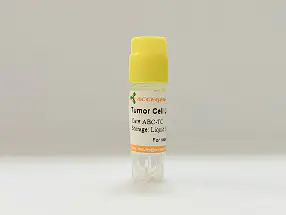
| Cat.No | ABC-TC0067 |
| Product Category | Tumor Cell Lines |
| Size/Quantity | 1 vial |
| Cell Type | Fibroblast |
| Growth Mode | Adherent |
| Shipping Info | Dry Ice |
| Growth Conditions | 37 ℃, 5% CO2 |
| Source Organ | Embryo |
| Disease | Normal |
| Biosafety Level | 1 |
| Storage | Liquid Nitrogen |
| Product Type | Mouse Mouseculus Fibroblas Lymphocytes Cell Lines |
BALB/3T12-3 cells serve as a robust murine model for investigating molecular mechanisms of tumor initiation and progression, particularly related to fibroblast transformation and oncogenic signaling. Their ability to form tumors in vivo makes them ideal for studying host-tumor dynamics, immune evasion, and therapeutic efficacy in syngeneic systems. Additionally, they are frequently used in assays evaluating transformation efficiency, soft agar colony formation, and experiments assessing responses to gene editing tools.
When you publish your research, please cite our product as “AcceGen Biotech Cat.# XXX-0000”. In return, we’ll give you a $200 coupon. Simply click here and submit your paper’s PubMed ID (PMID).