



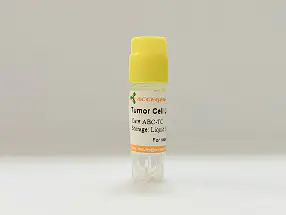
For research use only
| Cat No. | ABC-TC0076 |
| Product Type | Human Kidney Cancer Cell Lines |
| Cell Type | Epithelial-like |
| Species | Human |
| Growth Conditions | 37 ℃, 5% CO2 |
| Source Organ | Kidney |
| Product Code | BFTC 909; BFTC909; Black Foot disease Transitional Carcinoma 909 |
Explore BFTC-909 to model renal pelvis carcinoma with sarcomatoid features and investigate transitional cell carcinoma progression and pathology.
BFTC-909 is a human urothelial carcinoma cell line established in 1990 from the sarcomatoid component of a grade III transitional cell carcinoma (TCC) located in the renal pelvis of a 64-year-old male patient from an arsenic- and blackfoot-disease endemic region in Taiwan. These cells exhibit spindle-shaped, epithelial-like morphology and grow as monolayers containing prominent dark cytoplasmic granules. Cytogenetic analysis reveals multiple chromosomal aberrations, and BFTC-909 carries a TP53 point mutation (p.Ser241Cys), indicative of a disrupted p53 pathway. The cell line expresses vimentin, consistent with aggressive, sarcomatoid differentiation, and demonstrates tumorigenic potential in in vivo models using immunocompromised mice. The cells undergo stringent screening and testing procedures to ensure they are free from contamination by HIV-1, HBV, HCV, Syphilis, Mycoplasma, fungi, yeast, and bacteria.
| Product Code | BFTC 909; BFTC909; Black Foot disease Transitional Carcinoma 909 |
| Species | Human |
| Cat.No | ABC-TC0076 |
| Product Category | Tumor Cell Lines |
| Size/Quantity | 1 vial |
| Cell Type | Epithelial-like |
| Shipping Info | Dry Ice |
| Growth Conditions | 37 ℃, 5% CO2 |
| Source Organ | Kidney |
| Biosafety Level | 1 |
| Storage | Liquid Nitrogen |
| Product Type | Human Kidney Cancer Cell Lines |
BFTC-909 serves as a robust model for studying renal pelvis urothelial carcinoma and is widely used in research exploring the BFTC 909 scientific significance in tumor invasiveness, chemoresistance, and molecular pathogenesis. It is widely utilized in pharmacogenomic profiling, facilitating drug screening and biomarker identification. Researchers have employed BFTC-909 in evaluating combination therapies, demonstrating enhanced apoptosis and DNA damage responses. The line is also used to investigate ROS-inducing agents like auranofin, which induce cell-cycle arrest and cytotoxicity.
When you publish your research, please cite our product as “AcceGen Biotech Cat.# XXX-0000”. In return, we’ll give you a $200 coupon. Simply click here and submit your paper’s PubMed ID (PMID).